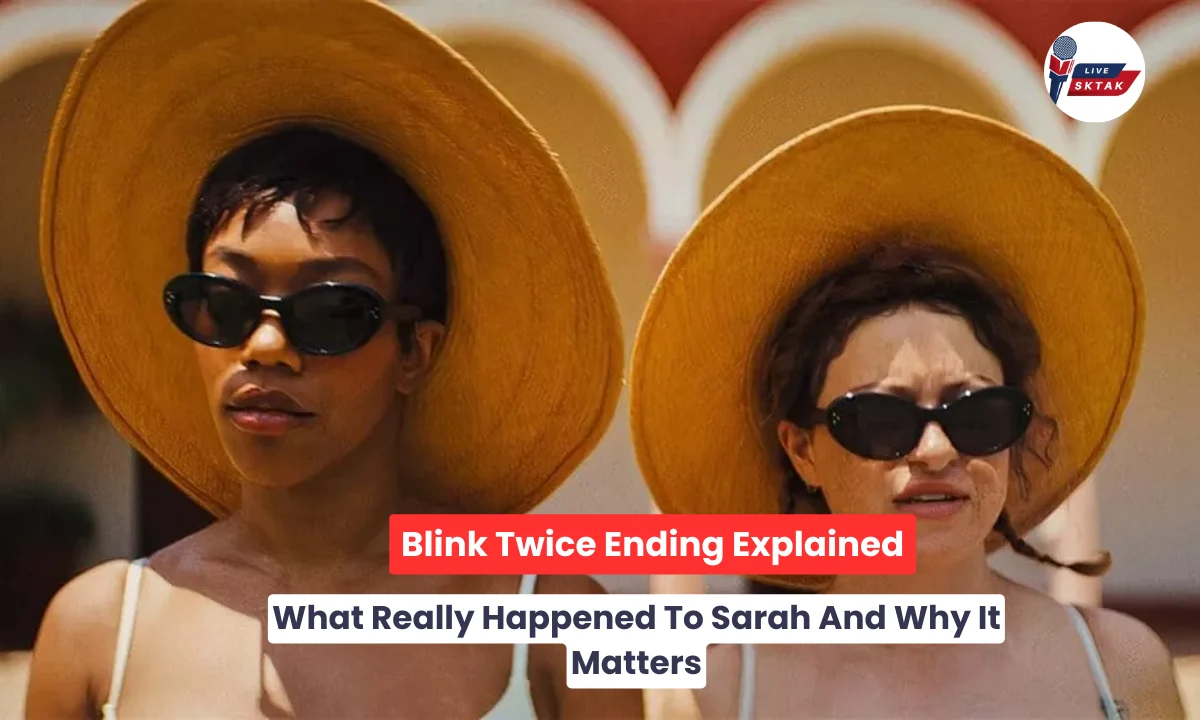
Blink Twice ending explained what happened to Sarah is probably the biggest question people are searching after watching this psychological thriller. Directed by Zoë Kravitz, the film leaves viewers uncomfortable, impressed, and slightly disturbed in the best way possible. It is not just about revenge. It is about power, control, memory, and what happens when victims decide they are done playing nice.
If you stayed till the final gala scene and wondered why Sarah was missing, you are not alone. Social media discussions, especially on X, are full of theories. Some are wild. Some are dark. But the truth is more subtle and honestly more powerful.
Key Takeaways
- Sarah survives the island massacre and helps kill multiple abusers.
- She questions Frida’s decision to save Slater instead of killing him.
- Sarah is absent from the final gala scene on purpose.
- Most interpretations suggest Sarah chose to walk away from Frida’s revenge plan.
- The ending highlights cycles of abuse and power reversal.
- Public opinion is divided between calling the ending triumphant and deeply disturbing.
A Quick Recap Of The Island Horror
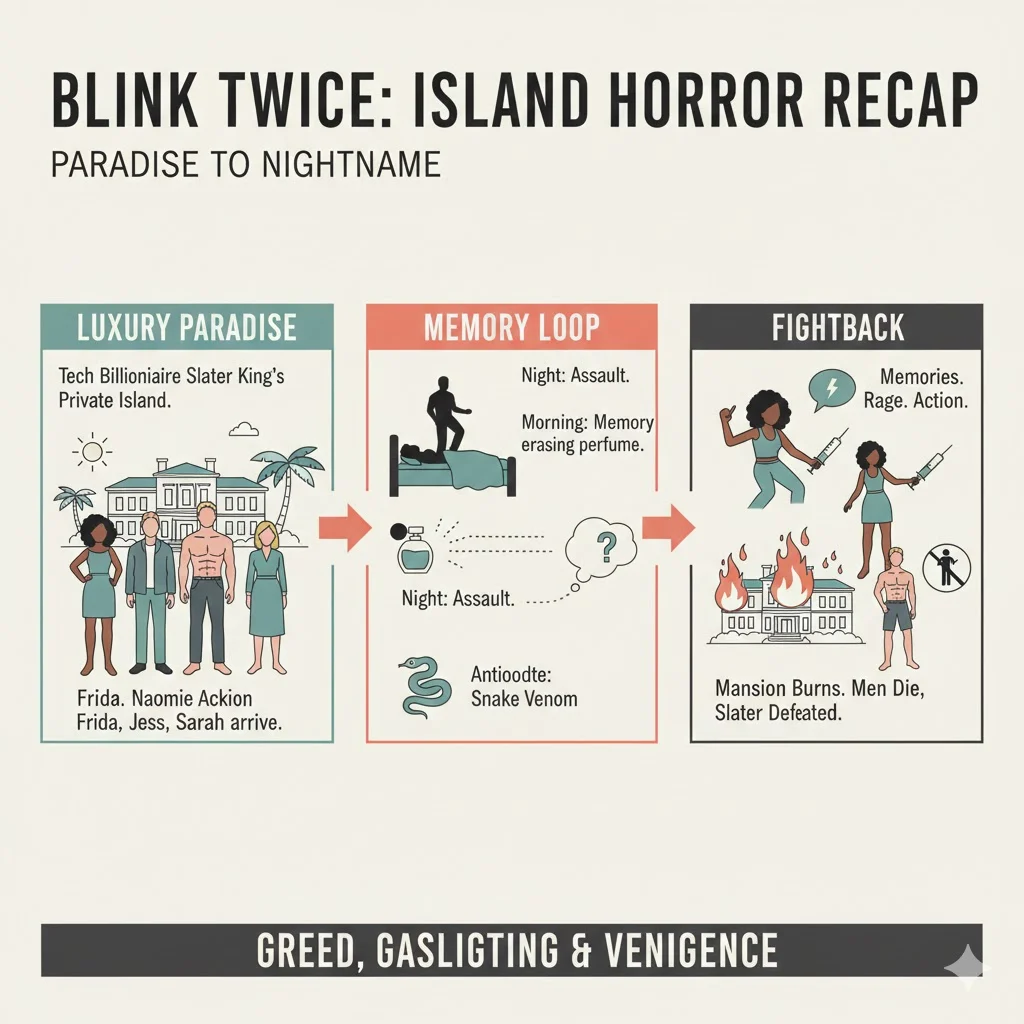
Blink Twice follows Frida, played by Naomie Ackie, who joins tech billionaire Slater King, played by Channing Tatum, on his private island. Along with her friend Jess and reality star Sarah, portrayed by Adria Arjona, she enters what looks like a luxury paradise.
But paradise turns into a nightmare.
The men on the island repeatedly assault the women at night. Every morning, the women forget everything because of a memory erasing perfume. The only antidote is snake venom found on the island. Once Frida and Sarah discover this, things change fast.
They secretly give venom to the other women. Memories return. Rage builds. And then the fightback begins. The mansion burns. Several men die. And Slater is at Frida’s mercy.
The Crucial Moment Between Frida And Sarah
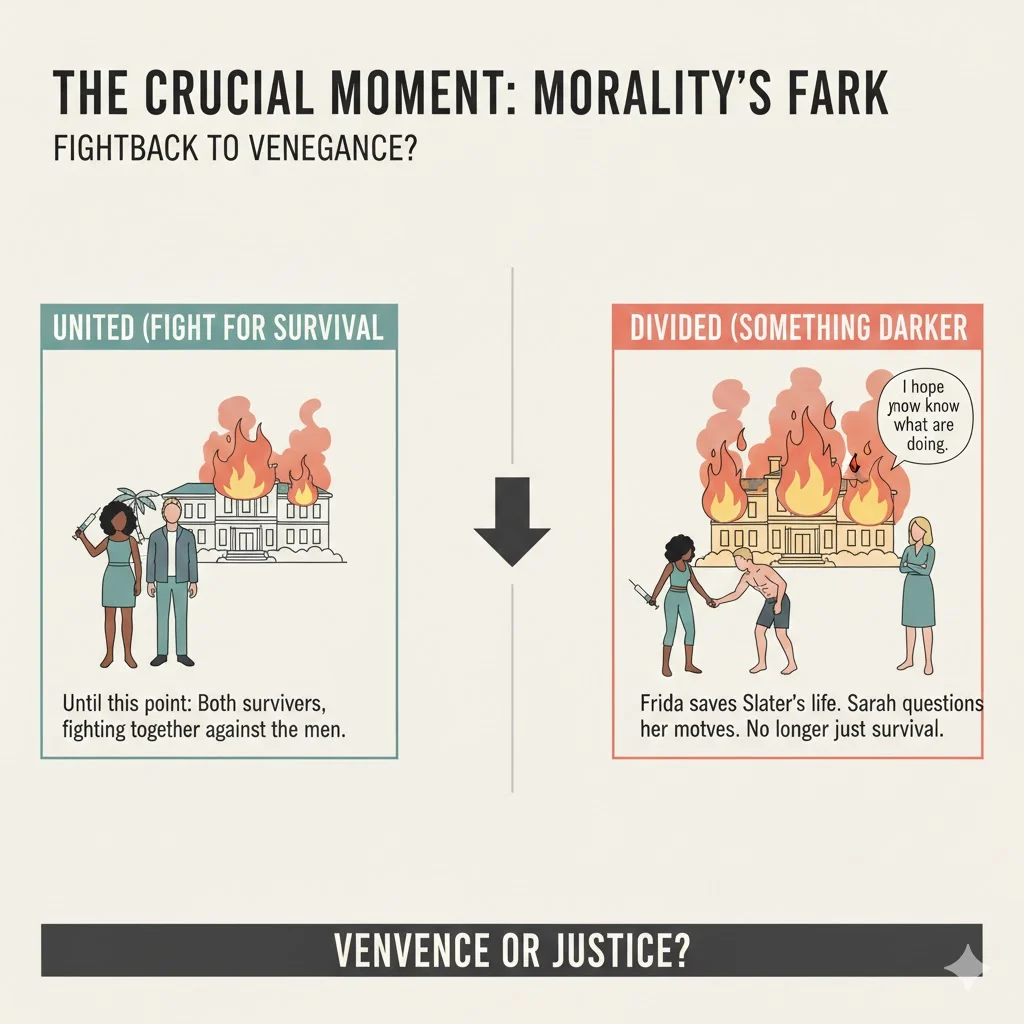
In the climax, Frida and Sarah overpower Slater. Instead of killing him, Frida drags him out of the burning mansion. That moment is important.
Sarah looks at Frida and basically says, I hope you know what you are doing. That line is not random. It is the emotional split between the two women.
Up until that point, they are united. Survivors fighting together. But when Frida decides to keep Slater alive, Sarah realizes this is no longer just about survival. It is about something bigger. Something darker.
What Happened To Sarah After The Fire
Let us be clear first. Sarah survives.
She kills Cody. She helps in the rebellion. She escapes the burning mansion. There is no confirmed evidence that she dies in the fire. The hallucination theory also has no strong backing in the film’s structure.
So why is she missing in the final gala scene?
In the epilogue, we see Frida married to Slater. She is now CEO of his tech empire. Slater is drugged through his vape with the same memory erasing substance. He lives in ignorance. Frida controls everything.
Sarah is not there. The most widely accepted interpretation is simple. Sarah walked away.
She likely chose not to participate in Frida’s long term revenge plan. She survived hell. She fought back. That was enough for her. She did not want to live in another form of manipulation.
Why Sarah Choosing To Leave Makes Sense
Sarah’s character arc supports this.
At first, she seems competitive and slightly jealous of Frida. But when things go wrong, she becomes a fierce ally. She is practical. She reacts fast. She kills when necessary. But she is not shown as power hungry.
Frida, on the other hand, has a line earlier in the film about success being the best revenge. That line pays off in the ending. Sarah probably wanted distance. Healing. Maybe even anonymity.
Being part of a public corporate takeover while secretly drugging a billionaire every day is not exactly peaceful living. Let us break this down in a simple comparison.
| Aspect | Frida | Sarah |
|---|---|---|
| Response To Trauma | Strategic revenge | Direct survival and escape |
| View On Power | Wants to take it | Wants to leave it |
| Final Position | CEO, married to Slater | Absent, likely returned to normal life |
| Moral Direction | Becomes controller | Chooses freedom |
This contrast is the heart of the ending.
Public Opinion On Sarah And The Ending
Discussions on X and Reddit show mixed reactions.
Some viewers call Sarah an underrated final girl. They appreciate how she shifts from rival to ally. Many praised her for killing her own boyfriend Cody once she realizes the truth. That moment hits hard.
Others feel the ending is bleak. A lot of people say the film shows victims becoming new predators. Instead of breaking the cycle, Frida continues it.
There are also viewers who found the real world parallels uncomfortable. Comparisons to powerful men abusing influence made the story feel too real for some. That made Sarah’s decision to step away even more meaningful to those audiences.
One common sentiment online is that Sarah represents the moral line. She fights back but does not cross into becoming what she hates.
Is There A Darker Theory About Sarah
Yes, there are fan theories.
Some speculate that Frida let Sarah die. Others say Sarah could be symbolic or partially imagined. But these ideas are not strongly supported by the film’s narrative logic.
Mainstream reviews and analysis agree that Sarah survives and chooses not to join Frida’s corporate revenge game. Her absence is not a plot hole. It is a statement.
The Bigger Meaning Behind Sarah’s Exit
Blink Twice is not just about assault and revenge. It is about power dynamics.
Slater believes forgetting is better than forgiving. He uses memory erasure as control. In the end, Frida uses the same tactic on him.
Sarah stepping away suggests another option. Not control. Not domination. Just leaving. The film quietly asks a tough question. When you gain power over your abuser, what do you do with it?
Frida chooses control. Sarah chooses distance. That difference is what makes the ending so layered.
Final Verdict On What Happened To Sarah
Sarah survives the island massacre. She helps bring down Slater and his friends. She questions Frida’s decision to save him.
She disappears from the final act because she likely refuses to participate in a new cycle of manipulation. Her story does not end in a flashy boardroom. It ends with survival.
And in a movie full of twisted power games, that might actually be the healthiest ending of all.
Sarah may not be in the final gala scene, but she remains one of the strongest characters in Blink Twice. Not because she takes over the world. But because she knows when to walk away.