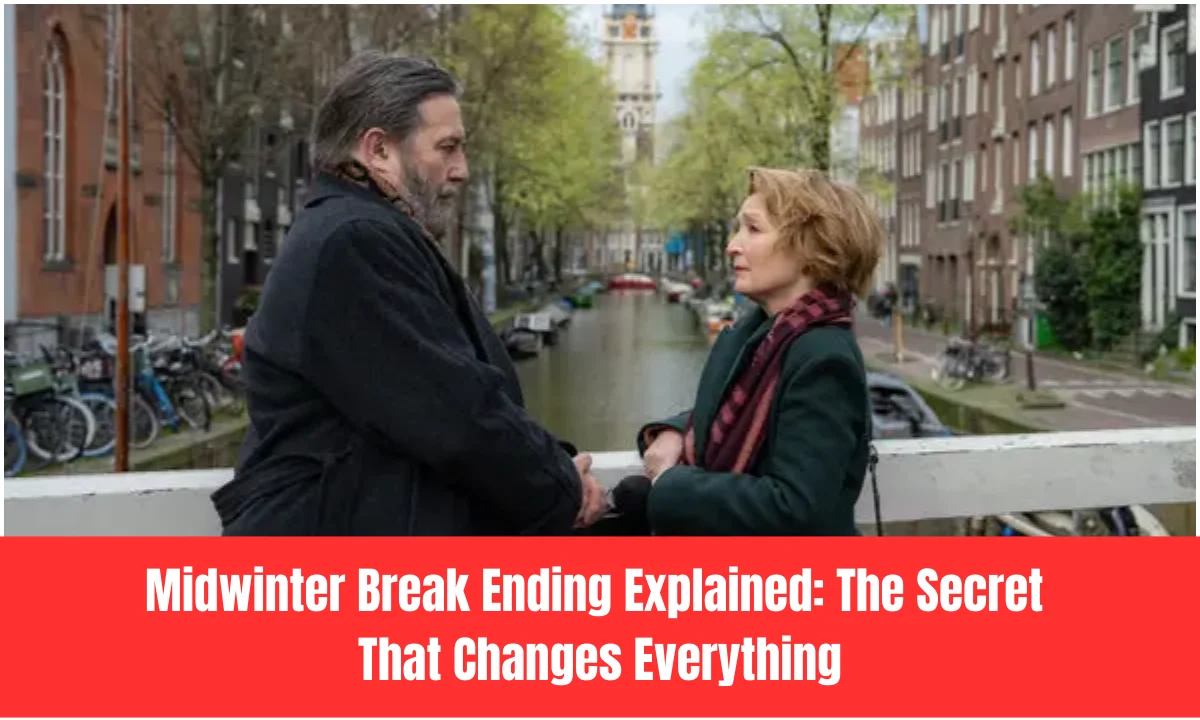
In winter 2026, Midwinter Break came to theaters without much buzz. After watching it many people felt confused and unsettled. They left the cinema with one main question. Does this married couple stay together after their trip to Amsterdam?
Or does the pain from the Troubles finally break their marriage?
The film does not give a clear answer. That is done on purpose. Before we go further, this article contains full spoilers. If you just walked out of Midwinter Break and are sitting there thinking, did they actually split or not, you are not alone.
The adaptation of Bernard MacLaverty novel has sparked intense debate. Some viewers see hope in the final exchange. Others see quiet collapse. The ambiguity is intentional and carefully crafted.
Set during a winter holiday in Amsterdam, the film looks simple on the surface. Retired couple takes a short trip then they visit museums and churches. They walk along canals. They share meals and small jokes.
But after that calm routine lies decades of unspoken trauma, faith struggles, and alcoholism. The real drama is internal. The ending at Schiphol Airport brings everything into the open without offering a neat solution.
Key Takeaways
- Midwinter Break is based on Bernard MacLaverty 2017 novel and adapted into a 2026 film.
- The film is directed by Polly Findlay.
- The film stars Lesley Manville as Stella and Ciaran Hinds as Gerry.
- The core secret revolves around Stella near death experience during the Belfast Troubles.
- Stella made a vow to God while pregnant and promised lifelong devotion if her baby survived.
- Gerry coped with the same trauma through alcohol and emotional withdrawal.
- The Amsterdam trip was not random and had a spiritual purpose for Stella.
- The Begijnhof visit symbolizes her desire for separation and religious fulfillment.
- The ending at Schiphol Airport is intentionally ambiguous.
- Book and film share the same open ending but differ in pacing and emphasis.
- Public opinion is divided between hope and quiet devastation.
Table of Contents
The Story Behind Midwinter Break
Midwinter Break was written by Bernard MacLaverty and published in 2017. The novel was inspired in part by a real visit he made to Amsterdam in 2001. He described the Begijnhof courtyard as a place of complete silence. That silence became central to Stella inner life. The novel is not only about old age. It is about two young people who once loved deeply and slowly fell out of step.
The 2026 film adaptation was directed by Polly Findlay. She came from theater and focused on subtext. She explained in interviews that the story lives in what the characters do not say. She believed the silences were as important as the dialogue. That approach shapes the tone of the film.
The story follows a retired couple who now live in Glasgow but were originally from Belfast. They travel to Amsterdam for a short winter break. On the surface, it feels like a routine holiday. They carry guidebooks. They plan sightseeing. They tease each other gently. They move with the rhythm of long familiarity.
But from the start, something feels slightly off. Their politeness hides distance. Their jokes feel practiced. Their habits feel protective. The film slowly reveals that this trip is not simple tourism. It is a quiet test of their marriage.
The tone is restrained. There are no loud confrontations. There are no dramatic betrayals. The tension builds through silence and memory. That subtlety is what makes the ending powerful.
The Core Secret In Midwinter Break
The central secret is rooted in the Belfast Troubles.
Years ago, Stella was caught in a violent shooting incident while pregnant. She was an innocent bystander. She was bleeding badly and feared she would lose her unborn child. In that moment of terror, she made a vow to God. She prayed that if her child survived, she would dedicate her life to Him.
In the novel she thinks, if you let this child live, I will dedicate my life to you. That line becomes the foundation of her guilt. It is simple and direct. It carries weight for decades.
They both survived. Their son grew up healthy and later moved to Canada. Life continued. On the outside, everything seemed normal. But Stella never forgot that vow.
She carried it quietly for decades. She felt spiritually indebted. She believed survival demanded repayment. For her, the event was a miracle. It required devotion. She believed her comfortable domestic life may have distracted her from a sacred promise.
Gerry experienced the same event but interpreted it differently. He did not see miracle. He saw senseless violence. He saw damage. Instead of turning toward faith, he drifted away from it. He began drinking more. His alcoholism was controlled on the surface. He hid bottles. He limited himself in public. But it shaped his personality and his emotional distance.
The book spends more time inside his routine. It shows him counting drinks. It shows him planning when to buy alcohol. It shows how secrecy became habit. The film hints at this through performance rather than narration.
This difference created a silent fracture. They shared the same trauma but built opposite narratives. That mismatch is the emotional engine of the story.
Stella Inner Conflict And Spiritual Debt
Stella believes she failed God. She believes she survived for a reason. She measures her life against that promise. She wonders whether her marriage was distraction from devotion. She feels both love and resentment. She loves Gerry for surviving with her. She resents the comfort that kept her from fulfilling her vow.
Her spiritual crisis is not dramatic. It is quiet and persistent. She attends Mass. She prays alone. She imagines a life of service. She does not hate her husband. She questions her own courage.
The Begijnhof represents an answer. Historically it housed Catholic women who lived in community without becoming nuns. They devoted themselves to prayer and service. In modern times it is secular. That detail matters. The ideal Stella imagines may no longer exist in the same way. The place symbolizes a dream that is both real and outdated.
Her visit there is private. She walks through the courtyard and feels the silence. She imagines belonging. She does not announce a decision. She tests a possibility.
Why Amsterdam And The Rijksmuseum Matter
The choice of Amsterdam is deliberate. It is not random tourism. Stella wants to visit the Begijnhof. That visit is the emotional center of her journey. The quiet courtyard contrasts with the noise of her marriage. It offers clarity.
The film also includes a scene at the Rijksmuseum. They stand before Rembrandt painting The Jewish Bride. The painting shows tenderness and protection. Stella sees devotion and sacrifice. Gerry sees something simpler. They look at the same image yet assign different meaning. This mirrors how they interpret Belfast differently.
Amsterdam becomes mirror for their relationship. The canals reflect stillness. The winter air feels suspended. The city is beautiful but cold. It matches their emotional state.
Even the airport matters. Amsterdam Airport Schiphol becomes symbolic space. They are delayed by snow. They are physically unable to leave. Emotionally they have been delayed for decades. The airport becomes place of confession and reckoning.
The Airport Confession Explained
The climax unfolds at Schiphol Airport. After days of quiet tension and small revelations, Stella finally speaks openly. She admits she still feels bound by her vow. She questions whether her comfortable marriage prevented her from fulfilling a spiritual obligation. She wonders if she needs a different life.
Her confession is calm. She does not accuse Gerry of cruelty. She does not dramatize her suffering. She simply tells the truth she has carried for years.
Gerry responds with honesty. He admits his drinking was response to fear. He feared losing her. He feared facing the memory of Belfast. Alcohol became shield. He acknowledges his distance. He admits he did not understand the depth of her spiritual struggle.
The conversation feels grounded and human. There are no grand speeches. There is recognition. Then comes the final exchange. Gerry asks, do you think we will ever get away.
On the surface, he refers to the delayed flight. On deeper level, he asks whether they will ever escape Belfast and the guilt that followed. Stella answers, we can only hope.
That line is simple. It holds uncertainty and possibility. The film stops there. No final embrace. No confirmed separation. Only openness.
Do Stella And Gerry Actually Split
The film never confirms their future. Both Lesley Manville and Ciaran Hinds have discussed the ambiguity. Manville has said she values endings that leave audience questioning. Hinds has described the couple as still negotiating their future even after confession.
Some viewers believe the confession creates new foundation. For the first time in years they are fully honest. That honesty may lead to healing. They may choose to redefine marriage rather than abandon it.
Other viewers believe Stella calling is too strong. Her need for religious fulfillment may require distance. The marriage might continue outwardly but remain changed.
The story refuses final answer. That refusal feels realistic. Real marriages evolve through conversation and small choices rather than dramatic exits.
Book Versus Film Important Differences
The 2017 novel provides deeper access to internal thoughts. It spends time on daily details. It describes hidden bottles and small resentments. It explores aging bodies and routines. Readers feel the weight of years.
The 2026 film adaptation is more condensed. It runs about ninety minutes. It relies on performance and visual symbolism. Snow covered streets replace long internal passages. Silence replaces pages of reflection.
Some critics felt the film pacing was slow. Others praised its restraint. Reviews described the performances as iceberg like. Much emotion remains under surface.
The ending remains faithful to the novel. There is no added twist. There is no clearer resolution. The book and film both end with hope mixed with uncertainty.
Public Opinion And 2026 Reactions
Since release discussion has been intense. Critics praised chemistry between Lesley Manville and Ciaran Hinds. Many called performances restrained and powerful. Some viewers found the story painfully realistic. Others found it unsatisfying.
Online debates focus on one question. Does confession save them or expose final fracture. Some argue the toast they share earlier suggests enduring bond. Others argue decades of silence cannot be repaired in one conversation.
The divided reaction reflects film central theme. Two people can see same story and reach different meaning.
Character Comparison Table
| Element | Stella | Gerry |
|---|---|---|
| Reaction To Trauma | Turned toward faith and deepened her religious devotion after the shooting. | Turned toward alcohol and emotional withdrawal after the same event. |
| Core Conflict | Feels bound by a spiritual debt and believes she must honor her vow to God. | Struggles with fear and avoidance and hides pain through controlled drinking. |
| View Of Marriage | Feels emotionally distant and questions whether her life fulfilled her promise. | Believes the marriage is stable but senses quiet strain beneath routine. |
| Amsterdam Purpose | Sees the trip as spiritual evaluation and personal reckoning. | Sees the trip as routine holiday and temporary escape from daily life. |
| Ending Position | Holds hope mixed with uncertainty about their future together. | Expresses desire to stay together and preserve the marriage. |
Themes That Make The Ending Powerful
Faith Versus Secular Survival: For Stella survival created obligation. For Gerry survival required endurance. Their difference shapes every conversation.
Silence In Long Marriages: They function well together. They joke gently. But politeness replaces deep intimacy. Many viewers recognize this pattern.
Trauma From The Troubles: The film avoids sensational violence. It focuses on aftermath. Political conflict leaves emotional residue for decades.
Aging And Reflection: Late life encourages reflection. Stella questions whether she lived faithfully. Gerry questions whether routine equals love. Age increases urgency.
Why The Ending Resonates Now
In post Troubles era many families carry unresolved memories. Midwinter Break examines how trauma reshapes partnership differently for each person. It suggests that survival does not guarantee shared meaning.
The film does not offer easy comfort. It invites discussion. It asks whether honesty can sustain marriage. It asks whether separation may represent growth rather than failure.
Final Meaning Of Midwinter Break
Midwinter Break is not simply about divorce. It is about interpretation. Two people can survive same event yet build different inner stories. One may see miracle. The other may see damage. Both perspectives are real.
The airport scene does not provide closure. It provides clarity. Stella and Gerry finally understand each other more deeply than before. Understanding does not guarantee reunion. It does not demand separation.
The secret that changes everything is not only Stella vow. It is realization that they have lived beside each other while carrying private meanings of same trauma.
The film leaves viewers with hope and uncertainty combined. Just like real relationships. That may be the most honest ending possible.