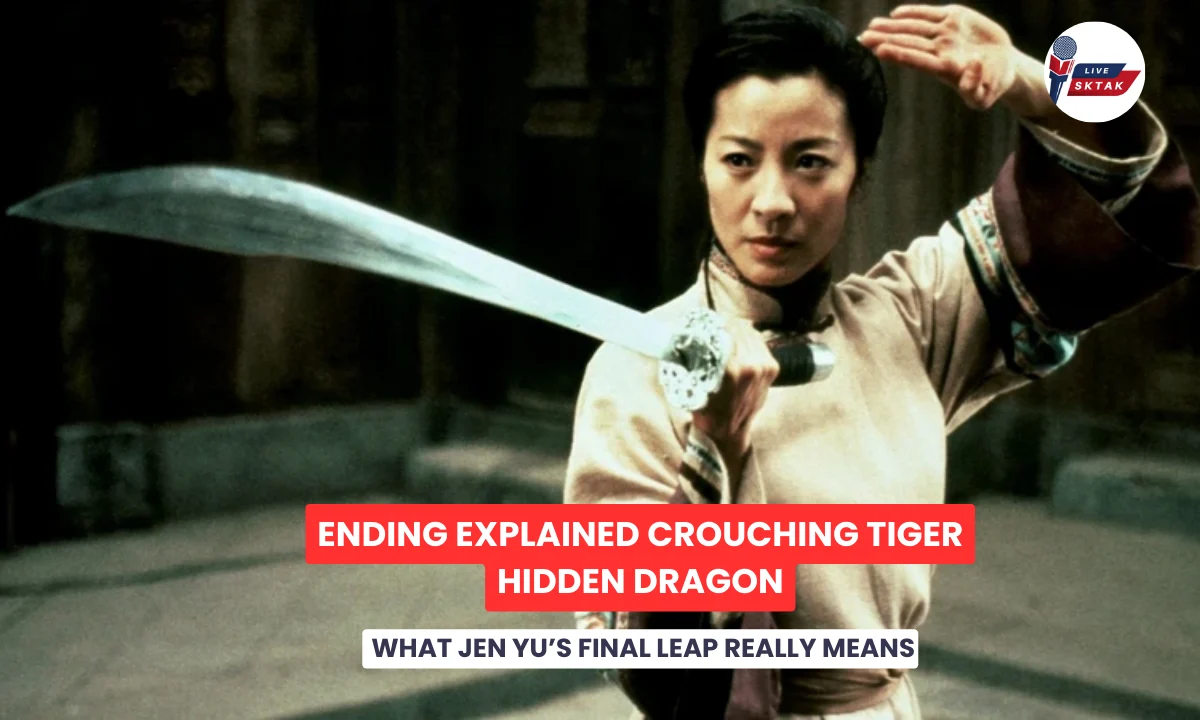
Crouching Tiger, Hidden Dragon has one of the most discussed endings in modern cinema. Even more than two decades after its release, viewers still debate the final scene where Jen Yu steps off the bridge on Mount Wudang and disappears into the clouds. Was it death. Was it freedom. Or was it something in between.
The ending feels quiet, emotional, and unresolved. That is exactly why it stays with people. This article explains the ending in a grounded, story driven way by connecting the final moments to the film’s core themes like freedom, guilt, love, and choice. Instead of forcing one answer, it helps you understand why the ending works precisely because it remains open.
Key Takeaways
- Jen Yu’s leap is intentionally ambiguous, not a confirmed death or survival
- The ending reflects themes of freedom, guilt, and emotional release
- The legend of the faithful heart is central to understanding the final scene
- Jen’s choice contrasts with the unfulfilled lives of Li Mu Bai and Shu Lien
- Most viewers interpret the ending as transcendence, not tragedy
Understanding The Final Moments At Mount Wudang
The last act begins after Li Mu Bai’s death, which becomes the emotional turning point of the film. His final confession of love to Shu Lien exposes a lifetime of restraint and missed chances. That regret echoes through the remaining scenes.
Shu Lien’s final advice to Jen is simple but powerful. She tells her to be true to herself. For the first time in the film, Jen is not being controlled by her parents, her master, her lover, or martial traditions. She is being asked to choose.
When Jen reunites with Lo at Mount Wudang, the scene feels calm and intimate. There is no conflict. They share a night together, and for a moment, it feels like the story could end in a conventional way. But the next morning, Jen walks alone to the bridge, where the film shifts from narrative clarity to symbolism.
The Legend Of The Faithful Heart Explained
The legend Lo once shared is key to the ending. According to the story, a young man jumps from the mountain with a sincere heart, and his wish comes true. He does not return, but he does not die in a traditional sense either.
Before jumping, Jen asks Lo to make a wish. He wishes to return to the desert, back to the time when they were free and together. Jen then steps off the bridge.
This moment reframes the entire scene. Jen is not acting impulsively. She is fulfilling the legend. Her leap becomes an act of faith, not escape. In this reading, the jump is not about ending life but about releasing attachment.
Freedom Versus Love As A Central Conflict
Throughout the film, every major character struggles with restriction. Shu Lien follows social duty and loses her chance at love. Li Mu Bai seeks spiritual peace but cannot let go of worldly regret. Jade Fox rebels against injustice but becomes consumed by bitterness.
Jen stands at the center of all these paths. She has seen what happens when people compromise too much or fight too recklessly. Her leap represents a refusal to repeat those patterns.
Choosing Lo would still mean a life defined by another person. Returning home would mean submission. Training at Wudang would mean entering a system that once excluded women. Jen’s final choice rejects all imposed identities.
Guilt And The Need For Redemption
Li Mu Bai’s death weighs heavily on Jen. While it is not portrayed as her direct fault, her actions set many events in motion. The film never shows her fully processing that guilt through words.
Instead, the ending expresses guilt through action. Her leap can be read as an act of atonement. Not punishment, but acceptance. She releases the sword. She leaves behind the comb. She carries nothing with her.
This symbolic shedding suggests a desire to move beyond past harm rather than erase it.
Why The Ending Is Not A Simple Tragedy
Some viewers initially read the ending as suicide. That interpretation is understandable, but it does not fully align with the film’s tone or visual language.
Jen does not fall violently. She glides. The camera follows her gently. The music is calm. The moment feels peaceful, not despairing.
In wuxia storytelling, physical laws are flexible. Characters often fly, float, or move beyond realism. The ending uses that language to suggest transcendence rather than finality.
Public Opinion On The Ending
Recent discussions on X show that audiences continue to admire the ending for its emotional depth. Many describe it as haunting, poetic, or quietly devastating in a beautiful way.
Some viewers call it one of the saddest endings in cinema, while others describe it as hopeful. A common theme is that the ending feels earned, even if it is painful.
The repeated sharing of the quote about a faithful heart shows how deeply that idea resonates. Viewers often connect the ending to personal reflections about choice, regret, and freedom.
Why The Ambiguity Is The Point
Director Ang Lee has never confirmed what physically happens to Jen after the leap. That silence is intentional. The film is not asking viewers to solve a puzzle. It is asking them to sit with uncertainty.
Life in the film is shaped by unspoken feelings and missed chances. A clean ending would betray that emotional honesty. The ambiguity allows each viewer to bring their own understanding to Jen’s choice.
Final Meaning Of Jen Yu’s Leap
Jen’s final leap is not about death or survival in literal terms. It is about agency. For the first time, she chooses without reacting to pressure.
Whether she transcends, disappears, or simply becomes a legend no longer matters. What matters is that her choice belongs to her alone.
That is why the ending of Crouching Tiger Hidden Dragon continues to be discussed. It does not close the story. It releases it.
Tags: crouching tiger hidden dragon ending, jen yu ending explained, mount wudang final scene, wuxia film analysis, ang lee movies, ambiguous movie endings, film ending explained