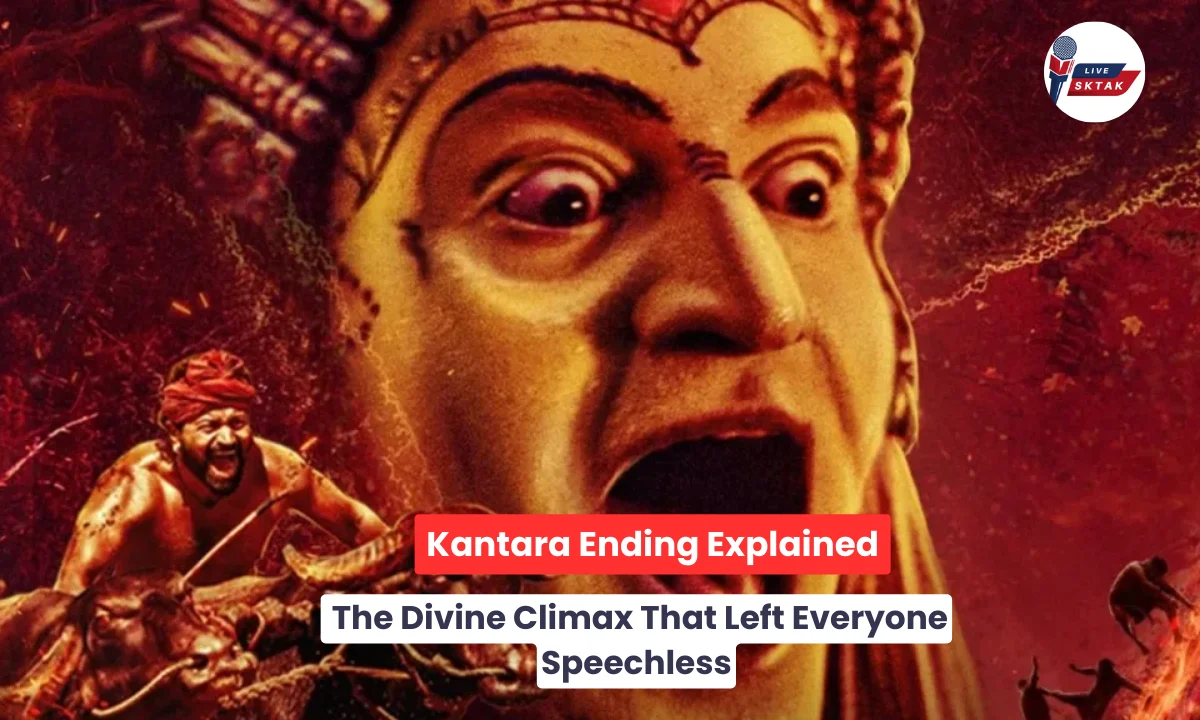
The Kantara ending explained debate is still going strong even years after the film’s release. When Rishab Shetty brought Kantara to theatres, no one expected the climax to become a full blown case study in Indian cinema. The final 20 minutes hit differently. Goosebumps. Silence in theatres. Then pure madness.
If you are confused about what really happened in the climax. Whether Shiva died. Whether he became Panjurli. Or why he vanished into the forest. This detailed breakdown will clear everything in simple words.
Key Takeaways
- Shiva gets possessed not just by Panjurli but also by Guliga in the climax
- The landlord Devendra’s death fulfills the ancient prophecy
- The fire circle scene mirrors Shiva’s father’s disappearance
- The unity moment symbolizes balance between forest, villagers and law
- The ending confirms Shiva becomes a permanent guardian spirit
- Public reactions on X call the climax a “separate filmmaking masterclass”
The Real Meaning Behind Kantara’s Climax
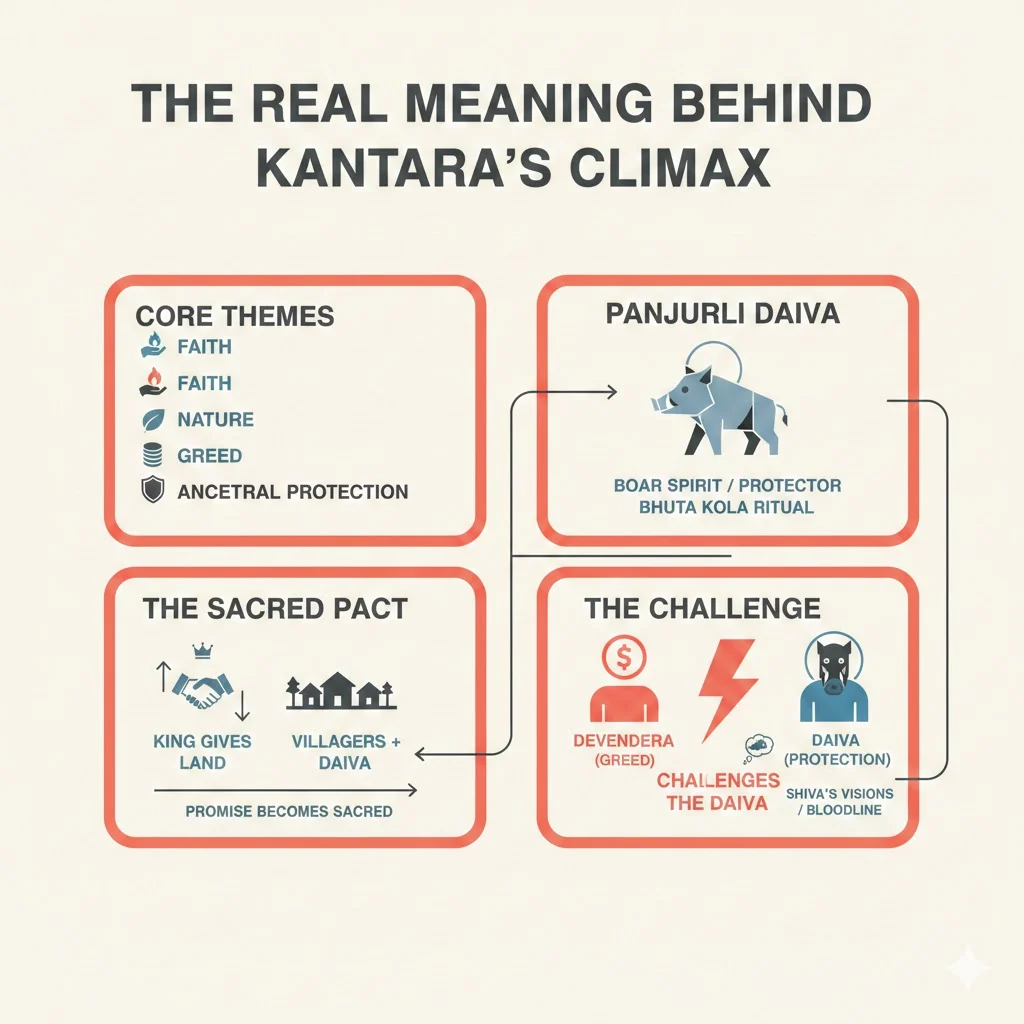
To understand the ending, we need to go back to the core theme of Kantara. This is not just a land dispute story. It is about faith, nature, greed and ancestral protection.
The village lives under the protection of Panjurli Daiva, a boar spirit worshipped in coastal Karnataka through the ritual of Bhuta Kola. Long ago, the king gave land to villagers after seeking blessings from the deity. That promise becomes sacred.
When Devendra, the greedy landlord, tries to break this pact, he is not just fighting villagers. He is challenging the Daiva itself.
Throughout the film, Shiva sees visions of a wild boar. That is not random. It hints at his bloodline connection with Panjurli.
How Shiva Transforms In The Final Battle?
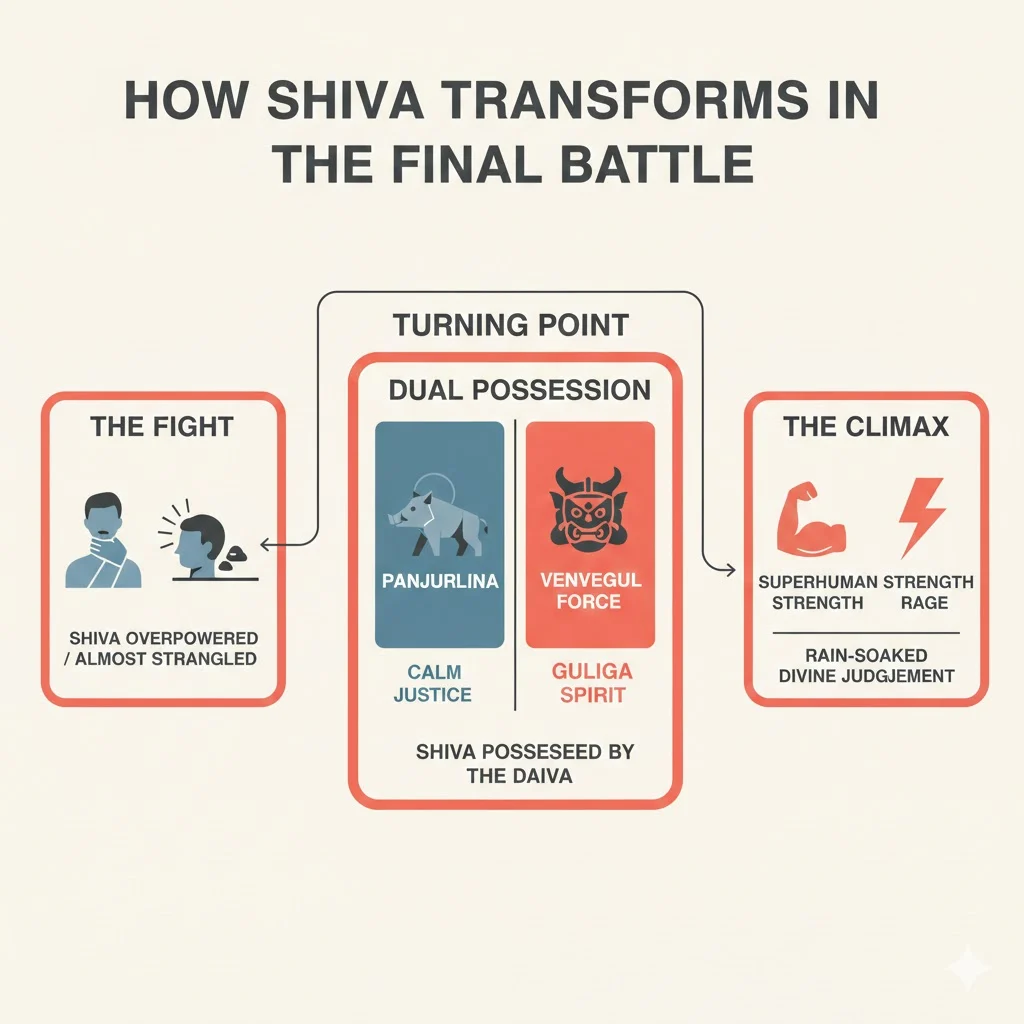
In the climax, Devendra’s men overpower Shiva. He is almost strangled to death. It looks like he is finished. Then comes the turning point.
Shiva’s head hits the sacred stone of Panjurli. That moment triggers possession. But here is the twist most people miss. He is not possessed by Panjurli alone.
He is also possessed by Guliga, a fiercer guardian spirit. On X, many viewers pointed this out. Some described Guliga as the “vengeful force” while Panjurli represents calm justice.
This dual possession explains Shiva’s extreme rage and superhuman strength. The rain soaked fight scene is not just action. It is divine judgment unfolding.
Why Devendra’s Death Was Inevitable
Remember the prophecy shown earlier in the film. The first landlord who insulted the Daiva died on the steps of a building. History repeats.
When Shiva, fully possessed, confronts Devendra, he declares that Panjurli may forgive but Guliga will not. Devendra’s blood spilling onto the soil symbolizes returning what was taken from nature.
This is not revenge. It is restoration of balance.
The Powerful Unity Scene Explained
One of the most emotional moments happens after the fight.
Shiva, still possessed, gathers the villagers and even the forest officer. He places their hands on his chest.
This scene is very important.
It shows:
- Villagers
- Authority
- Faith
- Nature
All must coexist.
Even the forest officer who earlier opposed village traditions becomes part of harmony.
On X, viewers called this moment spiritually overwhelming. Many said this was where the film went beyond commercial cinema.
Why Shiva Runs Into The Forest And Disappears
Now comes the biggest question.
Did Shiva die?
After peace is restored, Shiva hears an ancestral call from the forest. This is the same call his father heard years ago before disappearing.
He runs into the woods and merges into a circle of fire. This mirrors the opening sequence of the film.
Here is what it means.
Shiva transcends human form. He becomes a permanent vessel of the Daiva. He does not “die” in a normal sense. He becomes part of the forest’s spiritual protection system.
His wife being pregnant is crucial. It confirms the cycle continues. The protector bloodline survives.
Symbolism Hidden In The Ending
Let us break down the deeper symbolism in a simple table.
| Element | Meaning |
|---|---|
| Wild Boar Visions | Panjurli’s connection to Shiva |
| Sacred Stone Impact | Awakening of divine power |
| Rain During Fight | Cleansing and purification |
| Blood On Soil | Justice restored to land |
| Fire Circle | Union with nature and divinity |
| Pregnant Wife | Continuation of ancestral cycle |
Everything in the climax is layered. Nothing is random.
Public Opinion On X About The Climax
The Twitter reaction after release was wild.
Some trending opinions included:
- “The climax alone is worth the ticket price.”
- “Primal and fearsome portrayal of Hindu deities.”
- “Pre climax fight plus divine transformation is insane.”
- “Separate case study in filmmaking.”
- “Goosebumps guaranteed.”
Many viewers praised the raw presentation of Bhuta Kola without commercial dilution. The background score, especially Varaha Roopam, amplified the spiritual intensity.
People also appreciated that the gods were shown as powerful and terrifying. Not soft. Not symbolic. But active forces.
That authenticity made the climax unforgettable.
Is Shiva Really Panjurli Now
This is where many get confused. Shiva is not literally Panjurli.
He becomes a conduit. A living vessel.
In Bhuta Kola tradition, the performer becomes the deity during possession. After the ritual, he returns to normal life.
But Shiva’s case is different. His final merging suggests permanent transcendence. He becomes part of the divine cycle.
That is why he does not return.
How The Ending Connects To The Film’s Core Message
The film keeps repeating one message.
Humans cannot own nature.
The land belongs to the Daiva.
Whenever greed disrupts balance, divine intervention restores it.
Shiva’s transformation proves that faith and nature are interconnected. When humans forget their limits, the forest responds.
Simple.
Why The Climax Still Feels Fresh Today
Even after big budget action films and mythological dramas, Kantara’s climax stands apart.
Reasons:
- Rooted folklore
- Authentic cultural representation
- Intense physical performance by Rishab Shetty
- No over the top VFX dependency
- Emotional closure with spiritual depth
It did not feel manufactured. It felt lived.
That is rare.
Final Verdict On Kantara Ending
So here is the clear answer.
Shiva defeats evil through divine possession by Panjurli and Guliga. He restores balance between villagers and forest. He transcends human existence and merges with nature. The cycle of protection continues through his unborn child.
The ending is not tragic.
It is spiritual completion.
And that is why the climax of Kantara is still talked about as one of the most powerful endings in Indian cinema.