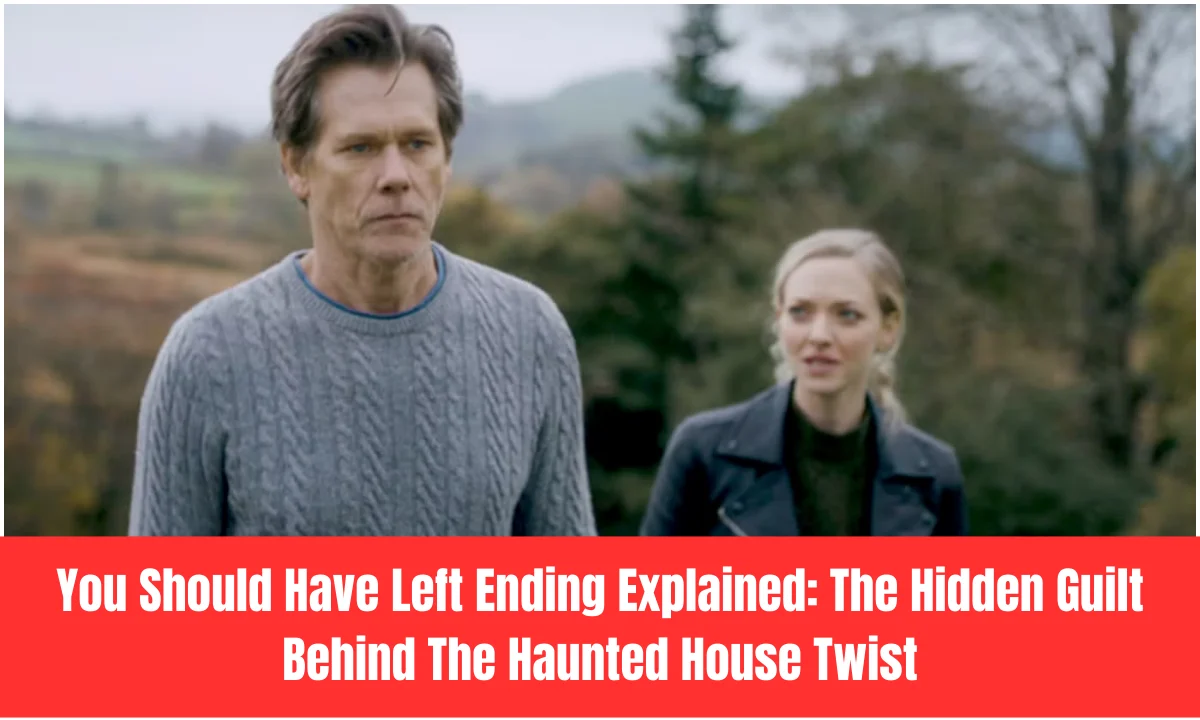
When people search for You Should Have Left ending explained, they are usually confused. Not because the story is complicated like a science fiction puzzle. The confusion comes from the emotional weight of the story. The horror is quiet. It stays in your thoughts long after the film ends.
At first The film looks like a simple haunted house story at first but Slowly it transforms into a moral drama about guilt and punishment.
Directed by David Koepp and starring Kevin Bacon and Amanda Seyfried, this 2020 psychological thriller focuses more on guilt and consequence than jump scares. It was produced by Blumhouse Productions and released during a time when many viewers were watching films at home. That quiet release helped the film gain a slow cult following over time.
Theo Conroy rents a strange modern house in rural Wales for a family vacation. He hopes the trip will repair tension in his marriage. Instead, the house begins to reveal secrets he has tried to bury. What he finds there is not a ghost in the traditional sense. He finds his own past staring back at him.
Koepp has said in interviews that the film is about an inappropriate marriage and unresolved guilt. He explained that guilt and purgatory are ideas that stayed with him from childhood. That theme shapes every scene in this film. Bacon also spoke about forgiveness and asked whether a person can ever truly pay for a terrible mistake. Those ideas sit at the center of the ending.
Before we break down the climax in detail, let us look at the bigger picture and understand the themes that guide the story.
Key Takeaways
- The house represents purgatory and personal guilt, not just a haunted location
- Theo allowed his first wife to drown and never forgave himself
- The time loops show Theo haunting his own past
- Susanna and Ella escape because the house targets Theo’s sin
- Theo becomes the shadow figure warning himself
- The ending is about accepting punishment instead of defeating evil
You Should Have Left: Plot Recap And Core Themes
Theo is a retired banker with a controversial past. His first wife died in a bathtub drowning. The official report ruled it accidental. Many people suspected something darker. Theo never fully escaped public judgment. More importantly, he never escaped his own conscience.
Now he is married to Susanna. She is younger and works as an actress. Theo struggles with jealousy and insecurity. He worries about her co star named Max. He checks her devices and questions her honesty. Their marriage already shows cracks before they arrive in Wales.
The couple rents a modern house in a remote area. From the first night, something feels wrong. The inside of the house is larger than the outside. Hallways stretch longer than expected. Rooms appear where none should exist. Time passes in strange ways. Theo begins finding messages in his journal that say, you should leave.
The film is based on a novella by Daniel Kehlmann. The source material focuses on isolation and the supernatural. The film version adds stronger marital tension and a deeper focus on guilt. Koepp made changes because he felt viewers had already seen many stories about writers losing their minds in remote cabins. He wanted to ground the story in a marriage that feels unstable from the beginning.
Themes that stand out include guilt, jealousy, sin, atonement, insecurity, and psychological breakdown. The horror grows from these themes rather than from loud scares. The film moves slowly and builds tension through atmosphere. Some viewers appreciated the restraint. Others felt it moved too slowly. That mixed response helped shape its reputation as a quiet cult favorite.
The House As A Character
The house is not simply a setting. It behaves like a living presence that responds to Theo’s emotional state. The modern architecture looks clean and luxurious. Yet something feels cold and unnatural about it. The structure does not obey normal geometry. Theo measures the exterior and compares it to the interior. The numbers do not match. The house is physically impossible.
Koepp explained that he wanted the last part of the film to feel disorienting. He compared it to waking up in a strange hotel room where the door is not where you remember it. That feeling guides the design of the house. Production used both a real location in Wales and a matching soundstage. This allowed doors to lead to different spaces without logical continuity. The crew even mapped the layout with detailed flowcharts.
Some viewers compare the impossible design to the novel House of Leaves because both feature interiors that are larger than their exteriors. The difference is emotional focus. That novel explores cosmic horror. This film explores moral guilt.
The shopkeeper mentions a mysterious figure named Stetler. He hints that some people do not leave the house. He says the place finds them. This line suggests that the house seeks out individuals who carry unresolved sin. It is not random. It reacts to specific guilt.
The house acts like purgatory. It traps Theo in repeating spaces until he accepts responsibility. The horror is not about being chased. It is about being confronted by truth.
Breaking Down The Climax And Theo’s Fate
In the final act, Theo finally admits what happened years ago. His first wife overdosed in the bathtub. He found her slipping under the water. He stood there and watched. He did not act quickly enough to save her. His inaction defines his life.
Theo confesses that he should have left that marriage instead of letting resentment build. That confession explains the title. The phrase does not only refer to the house. It refers to his first marriage and to the moment in the bathroom when he failed to act.
Throughout the film, Theo sees a shadowy figure watching the house. At first it seems like a demon. Later it becomes clear that the figure is Theo himself from another point in time. The journal messages were written by him. The warnings came from him. He was haunting his own timeline.
The time loop becomes clear in the final scenes. Theo realizes he has been both victim and observer. He sees himself leaving with Susanna and Ella. He sees himself standing outside watching. Past and future collapse together.
In the final choice, Theo tells Susanna and Ella to leave without him. They escape the house. He remains behind. He accepts that the house belongs to him now. He becomes the next trapped soul. Some interpret this as him becoming Stetler. Others see it as him becoming a guardian of the space.
His decision is not heroic in a traditional way. It is an act of acceptance. He cannot undo the past. He can stop dragging his family into his punishment.
Susanna’s Role And The Age Gap Marriage
Susanna has an affair with her co star Max. Theo discovers it through a hidden phone. The betrayal hurts him deeply. Yet the film shows a difference between their sins.
Susanna commits betrayal. Theo allowed a death to happen through inaction. The emotional weight is not equal. The house responds to deeper guilt. That is why Susanna can leave while Theo remains trapped.
Koepp openly described the story as being about a marriage that does not make sense. He told Bacon that the relationship itself is inappropriate because of the age gap and power imbalance. Theo feels insecure because he believes Susanna deserves someone younger. His jealousy grows from that insecurity.
The film suggests that Theo’s self hatred feeds the supernatural events. He believes he deserves punishment. Susanna does not carry that same belief about herself. Therefore the house does not claim her. The marriage was already collapsing before the vacation began. The house simply accelerates the breakdown and exposes what was hidden.
Time Distortion And Reality Breakdown
Time does not move normally in the house. Theo walks for hours and returns to the same point. His watch jumps forward and backward. Hallways lengthen without explanation. Doors appear in new places.
These distortions mirror how guilt works in the mind. A person replays a single moment again and again. They imagine different outcomes. They relive the mistake. Theo experiences that mental loop as a physical reality.
The backward walking scene visually represents time reversal. Theo appears to move against natural order. This suggests he is already outside linear time. He is both present and future at once.
The journal messages provide another clue. When viewed carefully, the handwriting matches Theo’s. The warnings come from him. On a second watch, these clues become obvious. The film rewards viewers who pay attention to small details.
What Really Happened In The Ending
The most direct interpretation is that the house functions as purgatory. It traps individuals who carry unresolved guilt. Theo belongs there because he never forgave himself.
He becomes part of the house. He may become the next Stetler. He may simply remain as a wandering presence. The film leaves that detail open.
The phrase You should have left carries multiple meanings. He should have left his first marriage. He should have left the house sooner. He should have left his anger and resentment behind. Each meaning reflects a missed opportunity.
The ending is tragic yet redemptive. Theo saves his daughter from sharing his fate. He accepts responsibility. He does not escape punishment. The film suggests that true atonement requires acceptance rather than escape.
Hidden Details And Rewatch Clues
Many viewers miss important details during the first watch. The film becomes richer during a rewatch.
The journal messages appear before Theo realizes they are his own words. The timestamps suggest they were written in a different point in the loop. Theo’s watch changes time without explanation. This detail hints that linear reality has already collapsed.
Polaroid images in the basement foreshadow future events. Some show water imagery that reflects the drowning of his first wife. The shopkeeper warns that some people do not leave. That line directly applies to Theo. He was already claimed by the house before he understood it.
The opening nightmare scene belongs to Theo rather than Ella. This detail becomes clear when examining perspective and dialogue. These clues show that the twist was present from the beginning. The film hides answers in plain sight.
Book Vs Movie Differences
In the novella by Daniel Kehlmann, the narrator is a screenwriter staying in a cabin in the Austrian Alps. The story uses a diary format. The twist becomes clearer earlier in the text. The book includes stronger folklore elements about a devilish presence connected to a tower.
The film changes the profession to a banker. It shifts the setting to a modern Welsh house. It delays the twist for cinematic tension. It adds marital jealousy as a major theme.
Koepp explained that films about writers losing their minds in remote houses feel familiar. He wanted to focus on a troubled marriage instead. The modern architecture also becomes more central in the film than in the book.
These changes make the movie more grounded in relationship drama. The core idea of guilt remains consistent across both versions.
Public Opinion And Cult Reputation
When the film released in 2020, reactions were mixed. Some critics praised the performance of Kevin Bacon. They admired the atmosphere and restraint. Others criticized the pacing and lack of traditional scares.
Over time, the film found a stronger audience on streaming platforms. It appears on slow burn horror recommendation lists each October. Many viewers describe it as an underrated entry in the Blumhouse catalog.
Comparisons often include The Others and Hereditary. These films also focus on grief and guilt rather than constant action. However, this story remains more intimate and contained. The reputation in recent years leans more positive than initial reviews suggested. The quiet tone allows it to age well.
Table: Key Symbols And Their Meaning
| Symbol | Meaning |
|---|---|
| The House | Purgatory and trapped guilt |
| Journal Messages | Self warning and regret |
| Water Imagery | Memory of the drowning |
| Time Loops | Mental replay of trauma |
| Shadow Figure | Future Theo accepting fate |
Final Thoughts On The Ending
You Should Have Left ends with acceptance rather than victory. There is no monster defeated. There is no curse broken. Theo cannot rewrite history. He can only accept its consequences.
The message feels simple but powerful. You cannot outrun your past. You must face it. On a rewatch, every hallway and journal entry carries new meaning. The twist does not exist only in the final minutes. It exists in every distorted space within the house.
The house did not trap Theo randomly. It revealed what was already inside him. That is why the ending continues to resonate years after release. The horror is not in the walls. The horror is in regret.