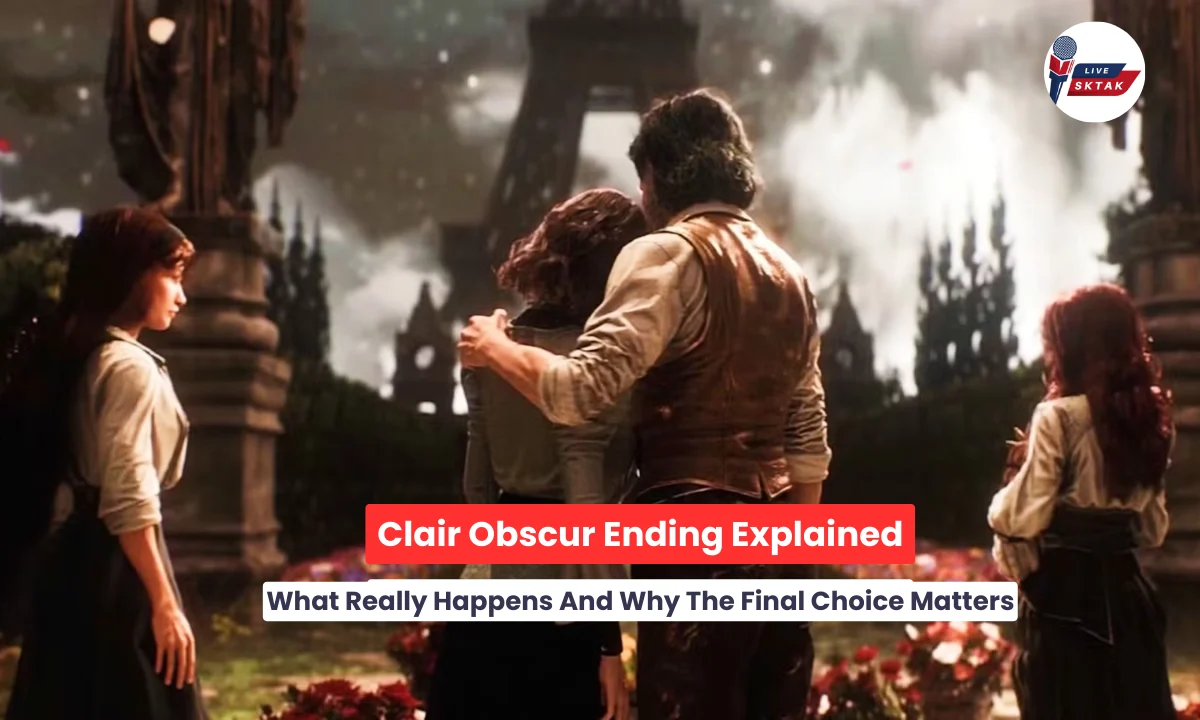
Clair obscur ending explained is one of the most searched topics after players finish Expedition 33, and for good reason. The game does not give a clean or comforting resolution. Instead, it places the player in the middle of grief, denial, and responsibility. By the time the final decision arrives, the story has already shown that no option leads to a perfect outcome.
The ending forces players to confront the core question of the game. Is it better to preserve a beautiful illusion that protects people from pain, or to accept loss and return to reality even if it hurts. Understanding the ending requires looking beyond the final fight and focusing on what the canvas truly represents.
Key takeaways
- The entire story takes place inside a painted world called the Canvas
- The Paintress is not a villain but a grieving mother
- Verso and Maelle represent two opposing ways of dealing with loss
- Both endings involve sacrifice and emotional consequences
- The game focuses on grief, escapism, and acceptance
Understanding The World Of Clair Obscur
The story of Clair obscur unfolds inside a painted world known as the Canvas. This world was created by the Dessendre family, who have the rare ability to paint entire realities. The Canvas exists because Verso, one of the children, died in a fire while saving his younger sister Alicia.
After his death, a fragment of Verso’s soul remained trapped inside the painting. His mother Aline, unable to accept the loss, escaped into this painted world. Over time, she created Lumiere and its people as a way to survive her grief.
What players experience during the game is not reality but a carefully sustained illusion built to protect those who could not let go.
Who The Paintress Really Is?
For most of the game, the Paintress appears to be the main threat. She paints numbers on the Monolith, and each year people of a certain age die in an event known as the Gommage. This makes her seem cruel and heartless.
Later, the truth is revealed. The Paintress is Aline, Verso’s mother. The numbers are not meant as punishment but as warnings. She is trying to manage the balance of the Canvas so it does not collapse.
Her actions come from grief, not malice. She is a parent who chose fantasy over facing unbearable reality.
Verso & Maelle Explained
The Verso you play as is not the real Verso. He is a painted version, given memories of the boy who died. He knows he should not exist and understands that his presence keeps his family trapped in pain.
Maelle is also not who she seems. She is actually Alicia, Verso’s younger sister, reborn inside the Canvas without her injuries or trauma. In this world, she is whole, loved, and free.
These two characters represent opposite responses to loss. Verso believes the family must move on. Maelle believes the Canvas is the only place where life feels worth living.
What Happens Before The Final Choice
By the final act, both parents have been confronted. Renoir, the father, wants to destroy the Canvas so the family can return to reality. Aline refuses to let go because the Canvas is the only place where her son still exists.
After defeating Renoir, the responsibility falls to Maelle and Verso. One wants to preserve the Canvas at all costs. The other wants to end it, even if it means erasing everything inside.
This leads to the final decision.
Choosing Maelle At The End
If you choose to fight as Maelle, you defeat Verso. He pleads to be allowed to rest, knowing that his continued existence only prolongs the family’s suffering.
Maelle refuses to let go. She keeps the Canvas alive and restores the people of Lumiere. On the surface, this ending looks peaceful. Friends reunite. Life continues.
But the final scene tells a darker story. Verso is shown performing music with visible reluctance. Maelle’s expression suggests she is slowly becoming like her mother, losing herself to the painted world.
This ending represents denial. Pain is avoided, but at the cost of freedom and truth.
Choosing Verso At The End
If you choose to fight as Verso, Maelle is forced out of the Canvas. One by one, the people and creatures of the painted world fade away.
Verso allows the fragment of his soul to stop painting. The Canvas collapses. Everything inside it ends.
The final scene returns to the real world. The family gathers at Verso’s grave and mourns him together for the first time. Alicia sees the painted companions one last time before they disappear.
This ending represents acceptance. It is painful and irreversible, but it allows healing to begin.
Public Reaction To The Ending
Player discussions show strong emotional division. Many players feel attached to the people of Lumiere and struggle with the idea that they must disappear. For them, Maelle’s ending feels kinder, even if it is unsettling.
Others believe Verso’s ending is necessary. They see the Canvas as a symbol of unhealthy escapism and view its destruction as the only way the family can truly heal.
Some players describe feeling empty regardless of their choice. This reaction appears frequently and suggests the game succeeded in its goal of leaving players conflicted rather than satisfied.
What The Ending Is Really About
Clair obscur is not asking players to pick a good or bad ending. It is asking them to reflect on how people deal with grief.
The Canvas represents comfort, art, and imagination. These things can heal, but they can also trap people if used to avoid reality entirely.
Verso’s choice is about letting go. Maelle’s choice is about holding on. Neither comes without loss.
The ending works because it refuses to give the player emotional safety. Just like real grief, there is no perfect resolution.
Final Thoughts
The ending of Clair obscur stays with players because it mirrors real emotional struggles. It shows how love can turn into control, how comfort can become a cage, and how healing often begins with pain.
No matter which ending you choose, something precious is lost. That discomfort is intentional.
Clair obscur does not reward the player with happiness. It rewards them with reflection.
Tags: Clair obscur ending explained, Expedition 33 story ending, Clair obscur finale meaning, video game ending analysis, narrative games explained, RPG story breakdown