O Romeo Review: Shahid Kapoor And Vishal Bhardwaj Deliver A Bloody Romance That Divides Audiences
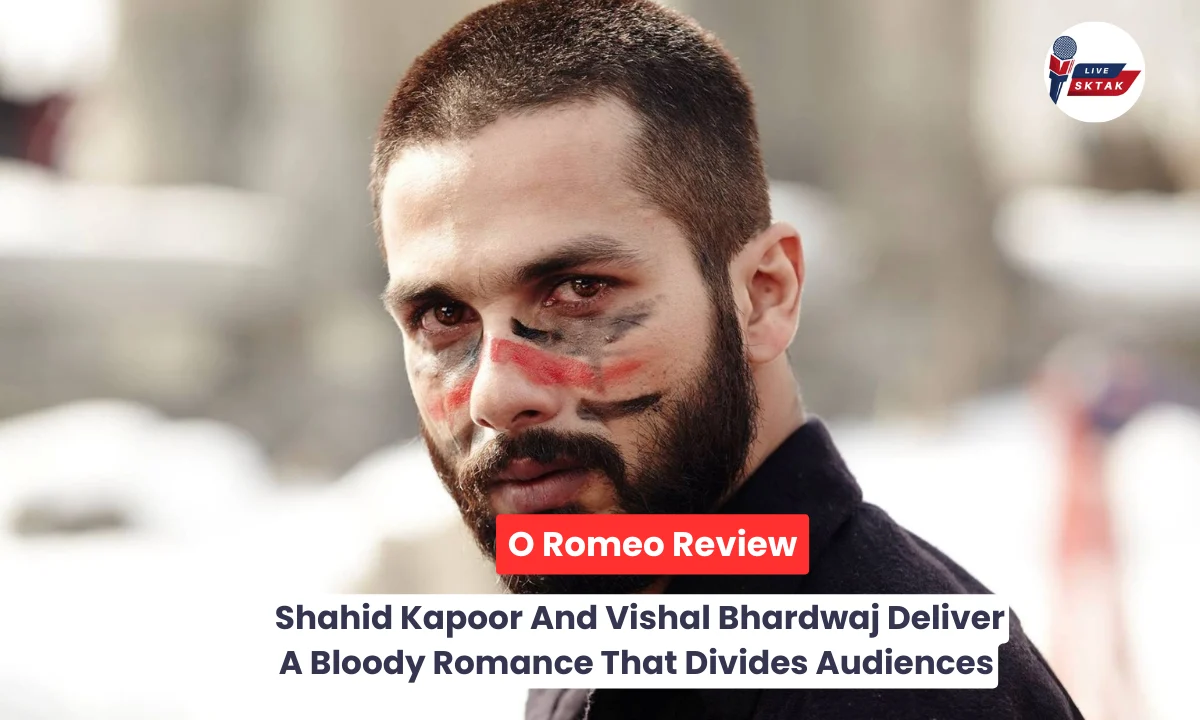
O Romeo Review: Shahid Kapoor And Vishal Bhardwaj Deliver A Bloody Romance That Divides Audiences
O Romeo review is trending across search engines and social platforms as the reunion of Shahid Kapoor and Vishal Bhardwaj finally arrives in theatres on February 13, 2026. After cult collaborations like Kaminey and Haider, expectations were sky high. This time, the duo dives deep into a gritty gangster romance set against the volatile landscape of post independence Mumbai.
Inspired by real underworld history and literary sources, O Romeo blends revenge, forbidden love, poetic rage and unfiltered brutality. Early reactions call it intense, stylish and emotionally heavy. Critics have offered mixed assessments, while public word of mouth appears far more enthusiastic. So does O Romeo live up to the hype or fall short of its towering ambition. Let us explore every dimension in this comprehensive review.
Key Takeaways
- Shahid Kapoor delivers one of the most ferocious performances of his career as Hussain Ustara
- Triptii Dimri impresses with a fierce yet emotionally layered portrayal of Afsha
- Vishal Bhardwaj crafts a violent yet poetic gangster world rooted in history
- The first half grips tightly while the second half feels overstretched for some viewers
- Audience reactions on X lean more positive than traditional critic reviews
- Day one box office trends show steady momentum with scope for growth through word of mouth
- OTT release is expected on Amazon Prime Video in late March or early April 2026

The Story And Real Life Inspiration Behind O Romeo
Directed by Vishal Bhardwaj, O Romeo draws inspiration from Mafia Queens of Mumbai by Hussain Zaidi. While the film takes creative liberties, it is loosely influenced by the real life figure of gangster Hussain Ustara who operated during Mumbai’s turbulent post independence era.
Set in a rapidly transforming city where loyalty is transactional and violence is currency, the story follows Hussain Ustara, a contract killer who also maintains covert links with intelligence networks. He is feared, respected and emotionally fractured. Into this blood soaked world enters Afsha, a woman carrying her own history of loss and vengeance.
Without revealing spoilers, O Romeo is structured as a tragic love saga unfolding inside a crime epic. It explores whether love can humanize a man built on violence or whether revenge ultimately consumes everything. The narrative interweaves political undertones, street level brutality and deeply personal betrayal.
The storytelling tone is dark and atmospheric. Violence is graphic but stylized. Dialogues carry a poetic rhythm that echoes Bhardwaj’s earlier Shakespearean influences. The film does not rush into romance. It builds tension through simmering confrontations and emotional pauses.
Shahid Kapoor As Hussain Ustara: A Career Defining Turn
Shahid Kapoor commands the screen from his very first appearance. His entry sequence, soaked in blood and backed by a thunderous score, immediately establishes the character’s volatility. This is not a charming anti hero. This is a man shaped by trauma and sharpened by survival.
There are glimpses of his intensity from Haider and the edgy unpredictability of Kaminey, but Hussain Ustara feels distinctly more grounded and dangerous. Shahid plays him with restrained fury rather than loud theatrics. His eyes carry exhaustion. His body language exudes authority. His silences speak as loudly as his dialogues.
Several early viewers on X have described this as Shahid’s most fearless performance yet. Many have used phrases like career best, electrifying and unstoppable. Even critics who found the screenplay uneven consistently praise Shahid’s commitment and transformation.
In emotional scenes, he allows vulnerability to surface without weakening the character’s menace. In action sequences, he delivers brutal choreography that feels both cinematic and disturbingly real. The performance alone makes O Romeo an event film for fans.
Triptii Dimri As Afsha: Strength Beneath Fragility
Triptii Dimri plays Afsha with a blend of innocence and simmering rage. She is not written as a passive romantic interest. Her arc is deeply intertwined with themes of revenge and identity. Afsha enters Hussain’s life not as salvation but as confrontation.
Triptii balances tenderness with steely resolve. Her emotional scenes add depth to the otherwise violent narrative. Social media reactions frequently highlight her screen presence as magnetic and compelling. Many viewers appreciated that her character does not disappear behind the hero’s arc.
However, some critics feel that the romantic progression between Hussain and Afsha unfolds too quickly in the second half. The emotional payoff could have been more layered. Despite this, Triptii emerges as a powerful co lead rather than a decorative presence.
Supporting Cast And Character Dynamics
The ensemble cast strengthens the film’s dramatic core. Here is a closer look at key performances and their impact:
| Actor | Role Impact | Audience Reaction |
|---|---|---|
| Avinash Tiwary | Primary antagonist | Menacing presence though slightly underwritten |
| Nana Patekar | Veteran authority figure | Commands respect with minimal screen time |
| Farida Jalal | Emotional anchor | Adds warmth and gravitas |
| Vikrant Massey | Special appearance | Brief yet impactful |
| Tamannaah Bhatia | Cameo role | Enhances commercial appeal |
| Disha Patani | Special appearance | Adds glamour and mass appeal |
Avinash Tiwary’s portrayal of the rival kingpin is chilling. His calm demeanor contrasts sharply with Hussain’s volatility. However, several viewers believe his character deserved deeper exploration. Nana Patekar brings weight to every frame he occupies. Farida Jalal delivers emotional grounding that prevents the film from becoming emotionally hollow.
The cameos and special appearances add scale and broaden audience reach, especially among younger viewers.
Direction, Visual Style And Technical Brilliance
Vishal Bhardwaj’s directorial stamp is visible in every frame. The cinematography captures Mumbai not as a glamorous metropolis but as a city of shadows and secrets. Narrow lanes, dimly lit rooms and expansive dockyards create an immersive underworld atmosphere.
The film revives the spirit of 90s gangster dramas while incorporating modern technical finesse. Action sequences are choreographed with raw realism rather than exaggerated spectacle. Bloodshed is unsettling yet purposeful.
The background score intensifies emotional beats and elevates dramatic tension. The title track has already gained strong appreciation for its haunting melody. The music does not merely accompany scenes but enhances the psychological landscape.
However, the nearly three hour runtime has divided audiences. While some appreciate the slow burn narrative, others find the second half stretched. Certain sequences could have been trimmed to maintain narrative momentum.
Audience Versus Critic Reception: Why The Film Is Polarizing
Critic ratings currently range between 3 and 3.5 out of 5. Many reviews praise the performances, visual style and ambition but critique the uneven screenplay and extended runtime.
In contrast, audience reactions on X are significantly more enthusiastic. Words like mind blowing, intense masterpiece and blockbuster are trending alongside the film’s name. Several users have rated it 4 or 4.5 out of 5.
Common praise points include Shahid’s dominance, gripping first half and emotionally charged action scenes. Common criticisms include pacing issues and slightly rushed romantic development.
This divide explains why O Romeo is being labeled as polarizing. It caters strongly to viewers who appreciate intense, stylized cinema but may not appeal to those expecting a tightly edited commercial entertainer.
Box Office Report And Competition
Early day one reports suggest a steady opening with promising advance bookings. Trade estimates indicate advance gross collections around 3 crore with projections between 6 to 9 crore net for the first day. While not record breaking, these numbers are stronger than some of Shahid Kapoor’s previous solo releases.
The film is competing with romantic drama releases during the Valentine weekend, yet its darker tone has carved a distinct audience segment. Word of mouth will play a crucial role in determining its long term theatrical performance.
If positive buzz continues, weekend growth could be substantial. Urban centers are showing stronger occupancy compared to smaller markets, which aligns with the film’s mature theme and intense content.
Comparisons With Previous Bhardwaj Films And Gangster Classics
Comparisons with Haider and Kaminey are inevitable. Unlike Haider, which leaned heavily into Shakespearean tragedy and political allegory, O Romeo feels more commercial and action driven. It sacrifices some literary depth for mass appeal.
Compared to Kaminey, the emotional arc here is darker and less playful. The violence is more graphic. The romance is more tragic.
In the broader gangster genre landscape, O Romeo revives the old school intensity of Mumbai crime dramas while adding modern production value. It blends poetic storytelling with visceral action in a way few contemporary films attempt.
Who Should Watch O Romeo
O Romeo is best suited for viewers who enjoy dark thrillers with layered characters and stylized violence. Fans of Shahid Kapoor’s intense roles will find this performance deeply satisfying.
Those who admire Vishal Bhardwaj’s atmospheric filmmaking will appreciate the visual detailing and thematic depth. However, viewers who prefer light hearted romance or tightly paced narratives may find the runtime challenging.
The film carries significant violence and mature themes, making it unsuitable for family viewing with children.
OTT Release Details And Streaming Update
Search interest around O Romeo OTT release is already rising. Industry buzz suggests the film will stream on Amazon Prime Video approximately six to eight weeks after its theatrical debut. A late March or early April 2026 digital premiere appears likely if the theatrical window remains standard.
This ensures long term visibility and broader reach beyond theatrical audiences.
Frequently Asked Questions
Is O Romeo based on a true story?
The film is inspired by real events and characters from Mumbai’s underworld history, particularly references drawn from Mafia Queens of Mumbai.
What is the runtime of O Romeo?
The film runs approximately 2 hours and 58 minutes, close to three hours.
Are the songs worth listening to
The title track and background score have received strong appreciation for enhancing the film’s mood.
Is O Romeo family friendly
No. The film contains graphic violence and mature themes, making it suitable primarily for adult audiences.
Is O Romeo worth watching in theatres
If you appreciate intense performances, poetic storytelling and gangster dramas, it offers a compelling big screen experience despite pacing issues.
Tags: O Romeo review, Shahid Kapoor O Romeo, Triptii Dimri O Romeo, Vishal Bhardwaj film, O Romeo public review, Bollywood gangster movie 2026, O Romeo OTT release
Related Posts :




Share This Post