The Long Walk Ending Explained: Who Really Wins And Why The Movie Changed The Ending
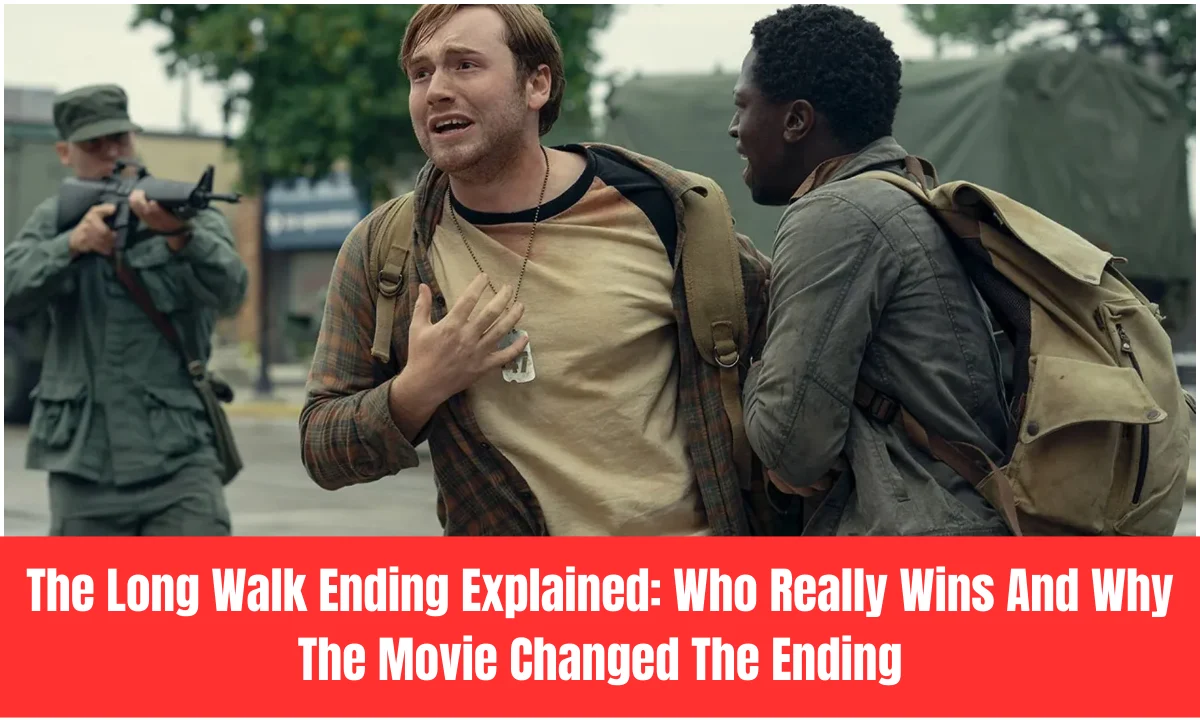
The Long Walk Ending Explained Who Really Wins And Why The Movie Changed The Ending | Image Via © geektyrant.com
After watching the movie the long walk ending really stuck with me. It is one of those finales that leaves you sitting there for a minute trying to process what you just saw.
If you have read Stephen King’s novel then you probably went in expecting the same bleak, psychological ending. But the 2025 film tells the story a little differently and the ending is not the same as the book.
At the time of the ending when the credit starts rolling I found myself asking the same questions that lot of other viewers seem to be asking:
who actually wins The Long Walk? Did Garraty really sacrifice himself? & why did the filmmakers decide to change the ending from the book?
The movie follows Ray Garraty and Peter McVries two teenagers forced into a brutal televised competition where fifty boys must walk nonstop at a minimum speed. If they slow down then they receive warnings.
After three warnings they are executed by soldiers. By the time the film reaches its final moments, the story becomes less about survival and more about friendship, sacrifice, and rebellion against the system.
Key Takeaways
- The Long Walk is a dystopian contest where boys must keep walking or be executed
- The final walkers are Garraty, McVries, and Stebbins
- Stebbins dies in third place near the end of the walk
- Garraty sacrifices himself so McVries can win
- McVries wins the competition and receives one wish
- Instead of choosing a peaceful wish, McVries asks for a gun and kills the Major
- The movie ending differs from the book, which ends with Garraty winning but mentally broken
- The film focuses more on friendship and sacrifice rather than pure nihilism
- The final scene remains ambiguous about McVries’ fate
What Happens In The Long Walk Movie
The story is set in a dystopian America ruled by a strict authoritarian government. Every year a brutal contest called The Long Walk takes place. Fifty teenage boys volunteer to participate, hoping to win a massive reward and one wish.
The rules of the contest are simple but deadly.
| Rule | Explanation |
|---|---|
| Minimum Speed | Walkers must maintain at least 3 miles per hour |
| Warnings | If they slow down, they receive warnings |
| Execution | After three warnings, soldiers shoot the walker |
| Winner | The last surviving walker receives a prize and one wish |
The competition is overseen by a powerful figure known as the Major. The event is broadcast to the public as entertainment and propaganda for the government.
Throughout the movie, the story focuses on the growing friendship between Ray Garraty and Peter McVries. While many competitors die along the road, the emotional core of the film becomes the bond between these two characters.
Another important detail added in the movie is Garraty’s motivation. His father was executed by the Major for speaking against the regime. Because of this, Garraty secretly plans to win the walk and use his wish to obtain a gun so he can kill the Major.
The Final Three Walkers Explained
Near the end of the competition, only three boys remain.
- Ray Garraty
- Peter McVries
- Stebbins
Stebbins collapses first and dies in third place after reflecting on his motivations. This leaves Garraty and McVries as the final walkers. At this moment, the emotional tension of the film reaches its peak. Both characters know that only one of them can survive.
McVries initially tries to sacrifice himself by stopping so Garraty can win and return to his family. However, Garraty refuses to accept this. Instead, he convinces McVries to keep walking.
In a shocking twist, Garraty stops walking himself. Because of the rules, soldiers immediately execute him. Garraty sacrifices his life so McVries can survive.
Who Wins The Long Walk In The Movie
The official winner of The Long Walk movie is Peter McVries. After Garraty’s sacrifice, McVries becomes the last remaining walker and wins the competition.
As promised by the rules, the winner is allowed to request one wish. Earlier in the movie, McVries had talked about wishing for something hopeful like allowing two winners in future competitions. But after watching Garraty die, McVries changes his mind.
Instead of a peaceful wish, he asks for a carbine rifle. He then uses the weapon to shoot and kill the Major, the man responsible for the brutal competition. After this moment, McVries simply walks away down the empty road. The movie ends there.
Why The Movie Changed The Ending From The Book
The ending of the film is very different from Stephen King’s original novel. In the book version, the final walkers are Garraty and Stebbins. When Stebbins dies from exhaustion, Garraty technically wins the walk.
However, the victory is meaningless.
Garraty becomes mentally broken after witnessing so many deaths. Instead of celebrating his win, he begins hallucinating and continues walking toward a dark figure in the distance. The novel ends with him running after it, suggesting that the trauma has destroyed his mind.
There is no revenge. There is no rebellion. Only psychological collapse. The movie changes this ending for several reasons.
1. The Film Focuses On Friendship
The movie places much more importance on the relationship between Garraty and McVries. Their bond becomes the emotional center of the story. Garraty sacrificing himself highlights the theme of friendship and loyalty.
2. A More Cinematic Ending
The novel’s ending happens mostly inside Garraty’s mind. That kind of psychological conclusion is difficult to show on screen. The filmmakers created a more dramatic moment by having McVries kill the Major.
3. A Small Act Of Rebellion
The movie gives the audience a brief moment of resistance against the oppressive system. McVries killing the Major represents a symbolic act of rebellion, even if it might not change the system.
The Long Walk Ending Still Remains Ambiguous
Even though the movie ending looks more decisive than the book, it still leaves several questions unanswered. One major question is whether McVries actually survives after shooting the Major.
Some viewers believe he is killed immediately by soldiers. Others think the final scene where the road becomes empty suggests that he is hallucinating or dying.
This ambiguity keeps the spirit of the original novel alive. The story suggests that even if someone technically wins the walk, the psychological damage remains. In many ways, the message is still the same. There are no real winners in The Long Walk.
What People Are Saying About The Ending
Public reactions online have been very divided. Discussions on social media and forums show a mix of admiration and criticism. Some viewers loved the emotional twist.
Many people felt that Garraty sacrificing himself made the ending more heartbreaking and meaningful. The friendship between the two characters resonated strongly with audiences.
Other fans preferred the original book ending. Readers of the novel argue that the darker and more nihilistic conclusion fits the story better. In the book, the horror comes from the idea that the system never changes and the trauma never ends.
There is also debate about McVries’ final fate. Some viewers believe he is immediately killed by soldiers after shooting the Major. Others interpret the final shot of him walking alone as a symbolic moment rather than literal survival.
Despite the debate, most viewers agree that the performances of the actors playing Garraty and McVries made the ending emotionally powerful.
The Real Meaning Of The Long Walk Ending
Beyond the plot twist, the ending of The Long Walk reflects deeper themes. The story is often interpreted as an allegory about war and the way governments send young people into deadly situations for entertainment or propaganda.
The walk forces teenagers to compete against each other until only one survives. This creates guilt, trauma, and psychological damage for anyone who remains alive. The film shifts the focus slightly toward friendship and sacrifice. Garraty’s decision shows that compassion can still exist even inside a brutal system.
McVries’ final act of revenge shows how trauma can push someone to abandon their ideals. Both endings, despite being different, reach a similar conclusion. The walk may end physically, but the emotional damage never truly disappears.
Final Thoughts
After watching this movie the ending really stayed with me. It felt emotional & A bit heartbreaking. Seeing Garraty sacrifice himself for McVries made the story feel more about friendship than just survival.
McVries technically wins, but it doesn’t feel like a happy victory. When he kills the Major and walks away alone, it leaves you wondering what really happens to him next.
For me the ending shows that even if someone wins the walk, the experience changes them forever. It’s powerful, sad, and it makes you think about the cost of the whole competition.
Related Posts :
Share This Post