India Russia Oil Deal 2026: Why India Is Still Buying Russian Crude Despite Global Pressure
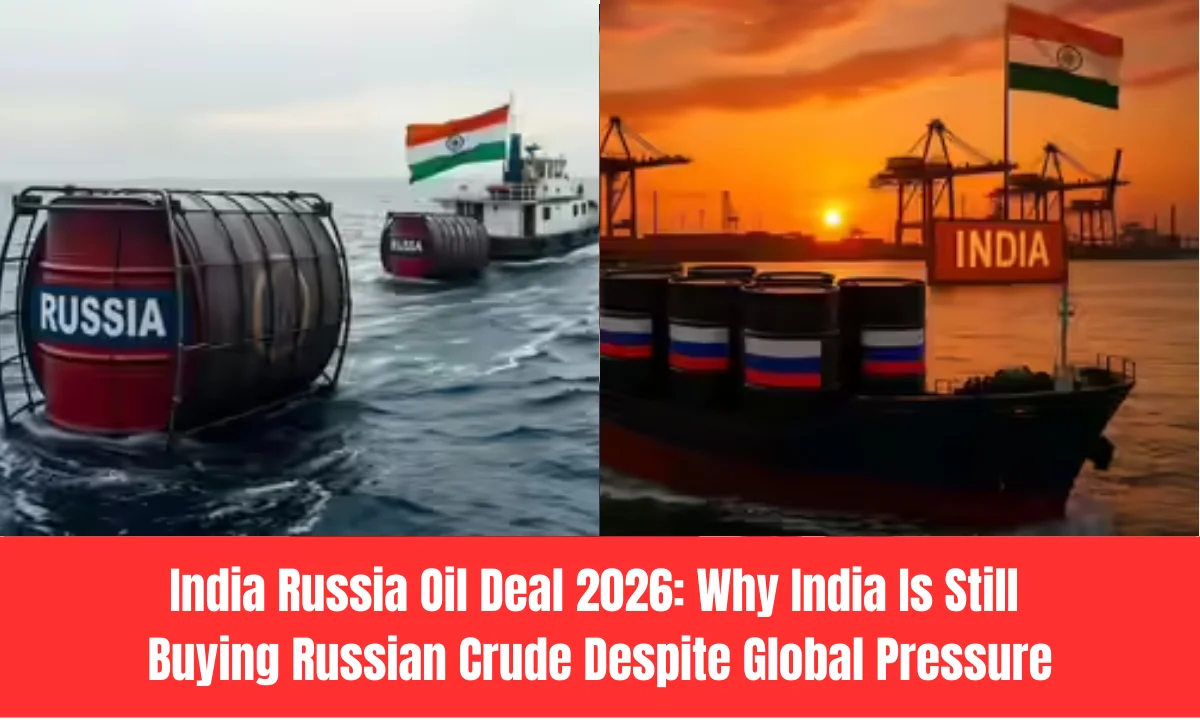
India Russia Oil Deal 2026 Why India Is Still Buying Russian Crude Despite Global Pressure | Image Via © timesofindia.indiatimes.com
India Russia oil trade has again become a hot topic in 2026. Many people are asking one simple question. Why is India still buying Russian oil? even when there is pressure from the US and major global powers?
The answer is not as simple as politics. It is mostly about energy security, oil prices and the need to keep fuel supply stable for 1.4 billion people.
In the last few years, Russia became one of the biggest oil suppliers to India because it offered crude oil at heavy discounts. But the situation changed many times in 2025 and 2026 due to sanctions, Middle East conflict and trade pressure from the United States.
Now with disruptions in the Strait of Hormuz and tensions involving Iran, Russian oil is once again becoming very important for India’s energy strategy.
Key Takeaways On India Russia Oil Deal
- Russia became one of India’s biggest oil suppliers after offering discounted crude
- Russian oil imports peaked in 2025 at more than 2 million barrels per day
- Imports dropped in late 2025 due to US sanctions and tariff pressure
- Middle East conflicts in 2026 are pushing India to buy more Russian oil again
- Around 40 percent of India’s oil imports normally pass through the Strait of Hormuz
- Russia has around 9.5 million barrels of crude available near Indian waters
- India continues balancing relations with Russia, the US and Gulf countries
India Russia Oil Trade Explained
India is the third largest oil importer in the world. The country consumes around 5.6 million barrels of crude oil every day. Because India produces very little oil domestically, it depends heavily on imports.
For many years India mainly bought oil from Middle East countries such as Saudi Arabia, Iraq and the United Arab Emirates. But the situation changed after the Russia Ukraine conflict in 2022.
Western countries imposed sanctions on Russia. This forced Moscow to sell oil at heavy discounts to new buyers. India quickly became one of the biggest buyers of Russian crude such as the Urals blend.
This deal helped both countries. Russia found a new market for its oil. India got cheaper crude which helped reduce the import bill and control fuel inflation.
Why Russian Oil Is Attractive For India
There are several practical reasons why India continues buying oil from Russia. They are as follows:
- Lower Prices: Russian crude has often been sold at a discount compared to Brent crude. This allows Indian refineries to process cheaper oil and improve profit margins.
- Stable Supply: Russia has been able to supply large volumes consistently. Even when global markets became unstable, Russian shipments continued.
- Energy Security: India imports more than 85 percent of its crude oil. Because of this, the government focuses on securing supply from multiple countries instead of depending on only one region.
- Refinery Compatibility: Many Indian refineries have adapted to process Russian crude efficiently. This makes it easier to continue purchasing Russian barrels.

How Much Oil India Imports From Russia
The amount of Russian oil imported by India has changed many times recently. India Russian Oil Imports Trend:
| Year / Period | Estimated Imports | Share Of Total Imports |
|---|---|---|
| 2023 | Around 1.5 million bpd | Nearly 30 percent |
| Mid 2025 Peak | Over 2 million bpd | 35 to 36 percent |
| Dec 2025 | Around 1.2 to 1.38 million bpd | 24 to 27 percent |
| Jan 2026 | Around 1.1 million bpd | Around 20 percent |
| Feb 2026 | Close to 1 million bpd | Around 30 percent again in some shipments |
This data shows how imports dropped sharply in early 2026 before stabilizing again due to new geopolitical developments.
Middle East Conflict And Strait Of Hormuz Impact
One of the biggest reasons for renewed interest in Russian oil is the current Middle East situation. The Strait of Hormuz is one of the most important oil shipping routes in the world. About 20 percent of global oil supply moves through this narrow passage. For India the importance is even higher.
Around 40 percent of India’s oil imports pass through this route. When tensions increase in the region, supply becomes uncertain.
Recent strikes on oil infrastructure and threats to shipping routes have raised concerns about disruptions. This forced Indian refiners to look for alternative suppliers.
Russian oil shipments are already moving toward Asia. Reports suggest around 9.5 million barrels of Russian crude are currently in vessels close to Indian waters and can be delivered quickly. This gives India a backup option if Middle East supplies become unstable.
India’s Current Oil Stock Situation
Many people worry about whether India has enough fuel reserves during global crises. Government sources say the country currently has around 50 days of energy supply available. This includes
- Around 25 days of crude oil reserves
- Around 25 days of refined products like petrol and diesel
On top of this, India also maintains strategic petroleum reserves which can be used during emergencies.
The government has also set up monitoring systems and control rooms to track supply levels across the country. Because of these measures, officials say there is no immediate shortage risk.
US Pressure And Trade Politics
Another major factor in the India Russia oil discussion is the pressure from the United States. The US government has tried to reduce global purchases of Russian oil through sanctions and trade policies.
In late 2025 the US even imposed tariff pressure on India related to Russian oil purchases. These trade tensions caused India to temporarily reduce imports from Russia. However India has maintained a consistent position.
The government says its energy policy is based on market conditions and national interest. India has also increased imports from other countries including
- Saudi Arabia
- Iraq
- United Arab Emirates
- United States
This strategy helps India maintain balance without depending on a single supplier.
Public Opinion On X About India Russia Oil
The conversation on X shows interesting public reactions to India’s oil strategy. Many users believe India is handling the situation smartly. Several posts highlight how India benefits from buying discounted Russian oil during global conflicts.
One popular comment joked that whenever global powers fight, India ends up getting cheaper oil deals. Other users praised India’s independent foreign policy. They argue that the country should focus on its own economic needs instead of choosing sides in global conflicts.
Some posts criticized Western pressure and said India should continue making decisions based on energy security. There are also practical viewpoints. A few analysts on X said that during supply disruptions availability becomes more important than price. In such cases Russian oil becomes an important backup source.
Overall the sentiment shows admiration for India’s pragmatic and non aligned approach to global energy politics.
Will India Continue Buying Russian Oil
Experts believe Russian oil will remain part of India’s energy mix for the foreseeable future. Several factors support this trend they are as follows:
- Discounted pricing still makes Russian crude attractive for refiners.
- Global supply disruptions often make diversified sourcing necessary.
- Russia continues redirecting oil exports from Europe toward Asian markets.
At the same time India will likely continue buying oil from the Middle East, the US and other regions. Instead of choosing one side, India is building a flexible energy strategy. This approach helps the country manage price volatility and protect domestic fuel supply.
My Final Thoughts
The India Russia oil trade is not just about politics. It is mainly about energy security, economic advantage and supply stability.
India’s growing economy needs reliable fuel imports to support industries, transportation and daily life for more than a billion people.
Because of this reality, the country continues to buy oil from multiple partners including Russia. With global tensions rising again in 2026 and Middle East supply risks increasing, Russian oil is once again playing an important role in India’s energy strategy.
Related Posts :


Share This Post