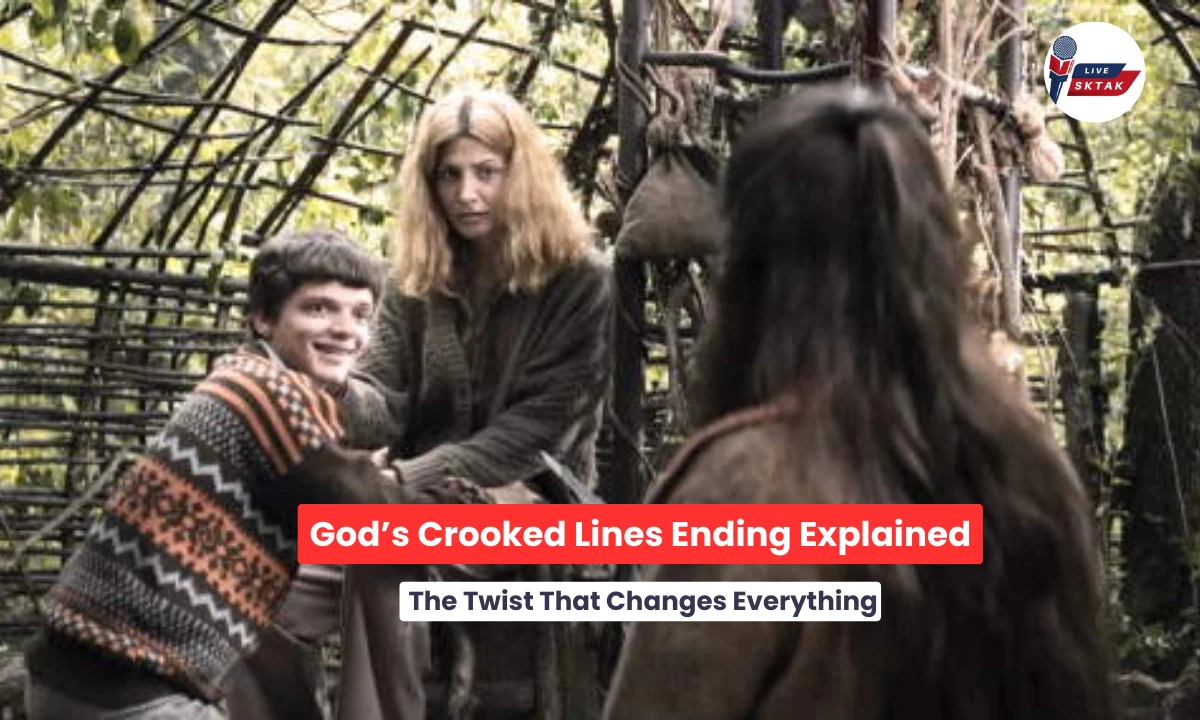
The ending of God’s Crooked Lines ending explained searches online point to one big question. Is Alicia Gould sane or is she trapped inside her own mind. The 2022 Spanish psychological thriller leaves viewers deeply divided after its final reveal. Directed by Oriol Paulo and based on the novel by Torcuato Luca de Tena, the film uses ambiguity as its strongest weapon.
From the first scene, Alicia appears confident and controlled. She enters a psychiatric hospital claiming she is an undercover investigator. As the story unfolds, every fact gets questioned. Every witness becomes unreliable. The final moments of the film do not give closure. Instead, they force the audience to confront the same uncertainty Alicia faces.
The ending does not confirm one truth. It challenges the idea that truth itself can ever be fixed. That is why the film continues to trend on social media and discussion forums even years after release.
Key Takeaways
- The film ending is intentionally ambiguous and open to interpretation
- Alicia may be sane, delusional, or both at the same time
- The final reveal redefines earlier scenes without confirming the truth
- Public opinion remains sharply divided on what really happened
- The movie focuses on perception, power, and mental health stigma
Alicia Gould And The Central Mystery
Alicia Gould enters the psychiatric institution claiming she is investigating a suspicious death. She presents herself as intelligent, composed, and methodical. Her background as a private investigator helps her win trust. At the same time, official records suggest she tried to poison her husband and suffers from paranoia.
This contradiction becomes the foundation of the story. Each explanation fits just enough to feel believable. Alicia’s confidence makes her story convincing. Medical reports make her look dangerous. The film never fully commits to either side.
The hospital itself plays an important role. It represents authority and control. Doctors observe, judge, and decide who is sane. Patients are stripped of voice and credibility. Alicia challenges this structure. That makes her either brave or deeply unwell.
The Non Linear Storytelling And Its Purpose
The movie frequently shifts timelines. Scenes of chaos, fire, and death appear before their causes are explained. This structure mirrors Alicia’s mental state or at least how the audience experiences her reality.
By breaking the timeline, the film removes certainty. Viewers are forced to assemble events on their own. This technique makes it harder to separate fact from interpretation. It also places the audience inside Alicia’s perspective without confirming if that perspective is reliable.
Many viewers online praise this approach. Others find it frustrating. That reaction is intentional. The film wants discomfort. It wants doubt.
The Final Scene And Why It Matters
At the end, a medical board prepares to release Alicia. Evidence suggests her husband drained her bank accounts. Dr Alvar, the hospital director, is exposed for misconduct. Everything points toward Alicia being right.
Then the final twist arrives.
Dr Donadío enters the room. He is the same man who brought Alicia to the hospital at the beginning. Alicia freezes. Her expression changes. She looks panicked. This moment rewrites the entire story.
If Dr Donadío brought her in, then her version of events collapses. If she mistook him for someone else, her paranoia becomes real. The film cuts before any explanation is offered.
That silence is the ending.
Two Main Interpretations Of The Ending
The film supports more than one conclusion. Both are valid based on the information shown.
Interpretation One Alicia Is Mentally Ill
This view suggests Alicia created elaborate narratives to protect herself from reality. Her intelligence allows her to justify every contradiction. When one story fails, she creates another.
The final reveal supports this idea. Seeing Dr Donadío causes immediate panic. It suggests her mind is already searching for a new explanation. This aligns with earlier medical descriptions of her condition.
Supporters of this interpretation point to:
- Her shifting stories
- The handwritten letters matching her style
- Her inability to recognize real people
Interpretation Two Alicia Was Framed
The second interpretation argues that Alicia was the victim of manipulation. Her husband benefited financially. Dr Alvar accepted excessive payments. The institution had power to silence her.
In this view, Dr Donadío’s appearance is another layer of control. His late arrival feels calculated. Alicia’s fear could come from realizing she may never escape the system.
Supporters of this theory point to:
- The drained bank accounts
- Alvar’s unethical behavior
- The institution’s readiness to use extreme treatments
How The Book Ending Differs From The Film
The novel provides clarity. It confirms Alicia suffers from paranoia. Her actions are explained in detail. The book removes ambiguity and offers closure.
The film intentionally avoids this. It separates itself from the book to focus on experience rather than answers. This choice makes the movie more divisive but also more memorable.
Many viewers online mention preferring the book’s clarity. Others praise the film for trusting the audience.
Public Opinion On God’s Crooked Lines Ending
Discussions on X and forums show a clear split in audience reactions.
Some viewers admire the ambiguity. They feel the ending reflects real life where truth depends on perspective. One popular reaction described the ending as mentally exhausting in a good way.
Others express frustration. They wanted a clear answer. Some say the final reveal invalidates the entire journey. A few felt the movie deliberately withholds resolution to appear clever.
A common theme appears across opinions. The film makes people think long after it ends. Whether they loved or disliked the ending, most agree it leaves a lasting impact.
Themes That Define The Ending
The ending is not just about Alicia. It reflects larger ideas.
Mental health is shown through a lens of power. Those who diagnose control reality. Women’s voices are questioned more harshly. Intelligence becomes both a weapon and a curse.
The film also explores truth as subjective. What feels real can still be false. What looks false can still be real. The ending forces viewers to accept uncertainty.
Why The Ending Works Even Without Answers?
The strength of the ending lies in restraint. It refuses to confirm what viewers want. Instead, it mirrors the experience of living with doubt.
Alicia’s story does not end. It simply stops being shown. That choice keeps the conversation alive.
For fans of psychological thrillers, this approach feels honest. Reality is rarely neat. Certainty is often an illusion.
Final Thoughts On God’s Crooked Lines Ending
The ending of God’s Crooked Lines is designed to unsettle. It does not reward passive viewing. It demands interpretation.
Whether Alicia is sane or not may matter less than what the film reveals about belief, authority, and perception. The final scene is not a twist for shock value. It is a mirror held up to the audience.
The film ends. The question remains.
Tags: God’s Crooked Lines, God’s Crooked Lines Ending Explained, Psychological Thriller Movies, Netflix Spanish Films, Ambiguous Movie Endings, Mental Health In Cinema, Oriol Paulo Films