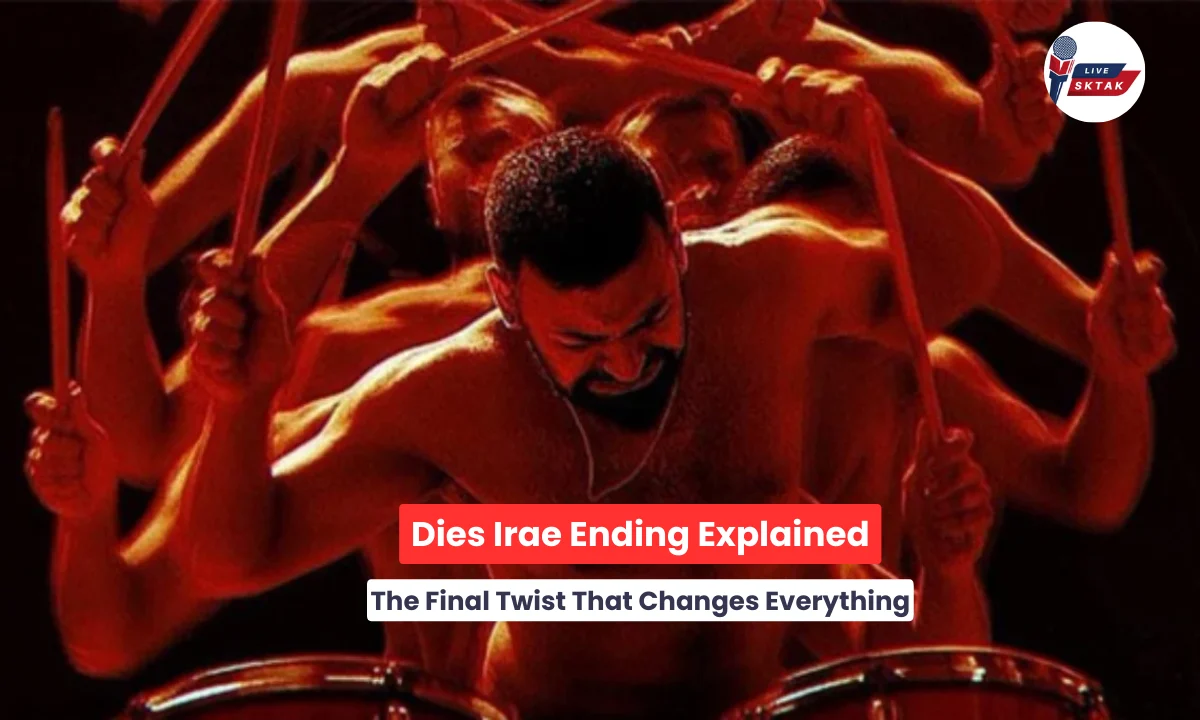
The Dies Irae ending explained discussion exploded after the Malayalam horror thriller landed on OTT, and for good reason. Directed by Rahul Sadasivan and led by Pranav Mohanlal, the film does not close its story in a clean or comforting way. Instead, it leaves viewers unsettled, questioning what was real, what was released, and what may still be waiting in the shadows.
At first glance, Dies Irae feels like a familiar ghost story driven by guilt and memory. But as the story unfolds, the film slowly pulls the rug from under every assumption the audience makes. The final minutes shift the meaning of the entire narrative and turn a solved mystery into a disturbing cycle.
Key Takeaways
- Rohan was not haunted by Kani’s spirit for most of the film
- The main ghost is linked to obsession, not heartbreak
- Manu aka Philip’s spirit was bound to Kani’s belongings
- The fire scene ends one haunting but hints at another
- The final hair clip moment reopens the horror
- The ending suggests an endless loop rather than closure
The Beginning Of Rohan’s Haunting
Dies Irae follows Rohan, a wealthy and emotionally detached young man who reconnects with his former classmate Kani. Their brief relationship ends abruptly when Rohan distances himself without explanation. Soon after, Kani dies, and Rohan pretends to move on with his life.
Everything changes when he visits Kani’s home and casually takes a hair clip from her room. This single action becomes the turning point of the film. From that moment, Rohan begins experiencing strange sounds, physical attacks, and suffocating night terrors. The film deliberately leads viewers to believe this is Kani’s restless spirit seeking justice or revenge.
The horror here is slow and intimate. There are no loud jump scares. Instead, silence, shadows, and sound design build unease. Many viewers on X praised this approach, calling it one of the strongest atmospheric horror films in recent Malayalam cinema.
Why The Ghost Was Never Kani?
The biggest twist in Dies Irae arrives when Rohan and Madhu begin investigating the source of the haunting. The clues slowly point away from Kani. The spirit attacking Rohan is male, violent, and territorial.
This revelation reframes the entire film. The ghost is not driven by heartbreak or betrayal. It is driven by obsession.
Kani was being stalked by a man named Philip, also known as Manu. He watched her from a distance, collected her belongings, and emotionally attached himself to her without her knowledge. His illness and eventual death did not end this obsession. His spirit remained bound to the physical world through Kani’s personal items, especially her anklets.
This shift is why many viewers describe the film as psychological horror rather than a standard ghost story. The fear comes from human obsession, not supernatural romance.
Manu’s Spirit And The Meaning Of The Anklets
Manu’s anklets play a crucial role in the film’s mythology. The sound of anklets is heard long before the truth is revealed. These sounds are not decorative horror elements. They represent the object anchoring the spirit to the living world.
Elsamma, Manu’s mother, preserved his body and performed rituals to keep his soul close. Her actions are driven by grief and denial, not evil. This moral complexity adds depth to the story. No character in Dies Irae is purely good or evil.
The anklets symbolize how attachment and obsession refuse to let go. As long as the object remains intact, the spirit cannot move on.
The Fire Scene And What It Really Ends
The film’s climax takes place inside Elsamma’s house, where Rohan is forced to confront the physical remains of Manu. When removing the anklets becomes impossible, Rohan makes a brutal choice. He destroys the part of the body binding the spirit and throws it into the fire.
This act finally releases Manu’s soul. The house burns, and the haunting appears to end. On the surface, this feels like resolution. Rohan survives. Madhu escapes. Elsamma loses her son a second time.
But Dies Irae does not believe in easy endings. The fire only closes one chapter, not the story itself.
The Final Hair Clip Scene Explained
Just when Rohan prepares to leave the country, the film delivers its most chilling moment. The familiar movement on the bed returns. The hair clip appears again. A whisper is heard.
This scene is intentionally vague. The film never shows the spirit. It never confirms its identity. But the implication is clear. Something remains.
The most popular interpretation is that Kani’s spirit was never truly addressed. Manu’s obsession caused the violence, but Kani’s unresolved emotional trauma still lingers. The hair clip represents unfinished guilt rather than supernatural revenge.
This ambiguity is why the ending divides audiences. Some viewers feel cheated by the lack of closure. Others praise the film for trusting the audience to connect the dots.
Public Opinion On The Ending
Public reactions on X show a clear split. Horror fans largely praised the ending for its psychological depth. Many described the climax as disturbing in a quiet, lasting way rather than shocking.
Some viewers felt the ambiguity weakened the payoff. They questioned why Rohan would remain in the house after repeated attacks. Others felt the unresolved ending was intentional and thematically consistent.
Below is a snapshot of audience sentiment:
| Opinion Type | Viewer Response |
|---|---|
| Positive | Loved the atmosphere and final twist |
| Mixed | Strong film but unclear ending |
| Negative | Felt overhyped and unresolved |
Despite the divide, most agree that Dies Irae sparked more discussion than typical horror releases. That alone signals its impact.
Is Dies Irae Connected To A Larger Horror Universe
Fans have speculated about links between Dies Irae and other films by Rahul Sadasivan. The shared themes of grief, isolation, and spiritual residue suggest a loose universe rather than a direct sequel setup.
Search trends for “Dies Irae Part 2” spiked after the OTT release, but there is no official confirmation. The ending works even without continuation. The horror lies in the idea that guilt does not disappear when explanations arrive.
What The Ending Ultimately Means
Dies Irae suggests that not all ghosts are external. Some are created by emotional neglect, silence, and unresolved responsibility. Rohan may have escaped one haunting, but he cannot escape what he ignored.
The final scene is not about fear. It is about consequence. That is why the ending stays with viewers long after the credits roll.
Tags: Dies Irae ending explained, Malayalam horror movie, Pranav Mohanlal film, Rahul Sadasivan movies, Dies Irae climax meaning, psychological horror Malayalam, Dies Irae ghost twist